
Print
Cite
Feedback
Share
Single-payer healthcare is a system in which one public insurer pays for medically necessary care for the whole population, financed by taxation, with private billing for covered services prohibited or tightly restricted. Canada’s medicare is the standard example: doctors and hospitals remain independent, but the provincial plan is the only buyer.
Conservatives distinguish the goal from the mechanism. That the sick should be treated without being ruined is common ground across the Western political spectrum. The conservative objection is to monopsony — the decision to make the state the only purchaser, which eliminates the alternatives against which the state’s own performance could be judged, and converts a shortage of care into a queue rather than a price.
Key Takeaways
- Single payer means one insurer, not state ownership of hospitals: Canadian physicians are private contractors, while Britain’s NHS both funds and owns the service.
- Saskatchewan under Tommy Douglas introduced universal hospital insurance in 1947 and medical insurance in 1962; the federal Medical Care Act followed in 1966 and the Canada Health Act consolidated the rules in 1984.
- The system’s structural weakness is waiting: the Fraser Institute’s 2024 survey found a median 30-week wait in Canada from GP referral to treatment, against 9.3 weeks in 1993.
- Conservatives favour universal coverage delivered through competing insurers with regulated entry — the Swiss, Dutch, and German models — over a state monopoly on payment.
- Defenders answer that single payer removes the administrative overhead of competing insurers and buys drugs and services at a lower unit price than fragmented systems achieve.
History And Context
Compulsory sickness insurance began in Germany. Otto von Bismarck’s Health Insurance Act of 1883 enrolled industrial workers in sickness funds financed by employer and employee contributions — not single payer, but the origin of the idea that coverage is a public obligation. Bismarck’s motive was defensive: he intended to draw workers away from the Social Democrats.
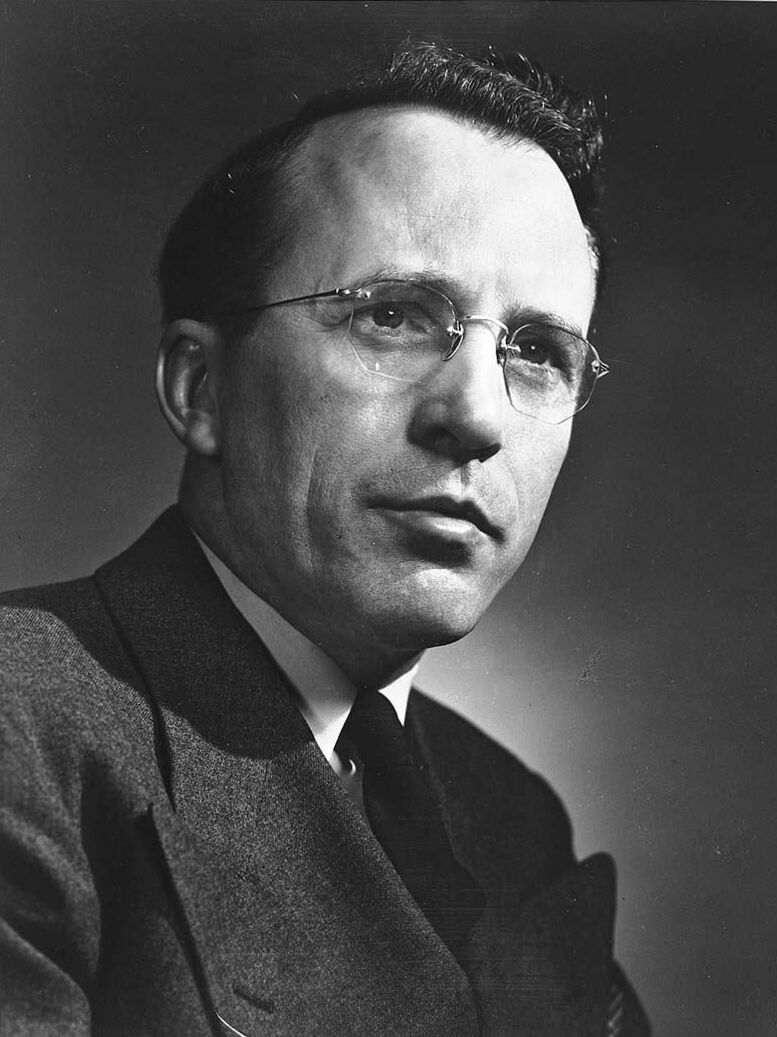
The Canadian sequence was provincial before it was federal. Saskatchewan, under the CCF government of Tommy Douglas, introduced universal hospital insurance in 1947, and in 1962 extended coverage to physicians’ services. The province’s doctors struck for twenty-three days in July 1962 against the medical care plan; the strike ended with the Saskatoon Agreement, which preserved fee-for-service practice and physician independence within the public plan. That compromise set the shape of Canadian medicare: private practice, public payment.
Ottawa followed with the Hospital Insurance and Diagnostic Services Act of 1957 and the Medical Care Act of 1966, both cost-sharing statutes. The Canada Health Act of 1984 set five conditions on federal transfers — public administration, comprehensiveness, universality, portability and accessibility — and penalised provinces that permitted extra-billing.
Britain took a different route. The National Health Service, established on 5 July 1948 on the basis of the 1942 Beveridge Report, nationalised the hospitals outright. Aneurin Bevan secured the consultants’ cooperation by allowing them to retain private practice, a concession he later described as having stuffed their mouths with gold.
The constitutional limit on Canadian single payer arrived in Chaoulli v. Quebec (2005), in which the Supreme Court held by a narrow majority that Quebec’s ban on private insurance for publicly insured services, combined with waiting times that endangered patients, violated the Quebec Charter.1
The Conservative Position
The conservative argument begins with rationing. Healthcare demand exceeds any budget, so every system rations. Systems with prices ration by price and by insurance design; single-payer systems ration by administrative decision and by time. Conservatives hold that the second method is less visible and therefore less accountable — a waiting list generates no invoice and no political record, while the patient waits.
The second argument concerns monopsony and exit. A single purchaser sets fees, sets the covered basket, and, where extra-billing is barred, forecloses the alternative. The historical scholarship on Canadian medicare documents how quickly the profession’s bargaining position narrowed once one buyer controlled the market.2 Without a lawful private tier, a Canadian patient facing an unacceptable wait has one remaining option: leave the country and pay.
The third argument is federal and fiscal. In Canada, health consumes between a third and 40 per cent of provincial programme spending depending on the province, while the federal government sets the conditions through the Canada Health Act, so the level of government that writes the rules is not the level that bears the cost. Conservatives regard that split as a standing incentive to expand entitlements and defer the bill.
Conservatives do not conclude from this that people should go untreated. The alternative most often advanced is regulated universal insurance with multiple payers: Switzerland requires every resident to buy cover from competing non-profit insurers with subsidies for low incomes; the Netherlands runs a similar model; Germany retains its sickness funds. All achieve universal coverage without a state monopoly on payment, and OECD comparisons place reported waits for elective surgery in Germany and Switzerland well below the Canadian figures.4
Differing Positions
Defenders of single payer make an administrative argument first. The United States spends a substantially larger share of health expenditure on administration than Canada does, a gap Steffie Woolhandler and David Himmelstein have attributed to the overhead of multiple insurers, each with its own billing rules and utilisation review.3 One payer means one set of forms.
The second argument is about purchasing power. A single national buyer negotiates drug prices and fee schedules from a position no fragmented market can match, which is a principal reason Canadian pharmaceutical prices sit well below American ones.
The third is about equity. Where a private tier is permitted alongside a public one, defenders argue that specialists divide their time between the two, that the private queue draws capacity out of the public one, and that the result is faster care for those who can pay financed partly by a public system they have partly drained. The Canada Health Act’s restrictions exist to prevent that.
Conservatives answer with the mixed European systems, which combine universality with private provision and produce shorter waits than Canada without abandoning the equity commitment. Defenders reply that those systems cost more as a share of national income and depend on regulatory machinery that is not simply portable. The dispute is empirical, and both sides have real data on their side of it.4
References
- Chaoulli v. Quebec (Attorney General), 2005 SCC 35.
- Gregory P. Marchildon, ed., Making Medicare: New Perspectives on the History of Medicare in Canada (University of Toronto Press, 2012).
- Steffie Woolhandler, Terry Campbell and David U. Himmelstein, “Costs of Health Care Administration in the United States and Canada,” New England Journal of Medicine 349 (2003).
- OECD, Health at a Glance 2023: OECD Indicators (OECD Publishing, 2023).
You've read articles over the past year
Will you support conservative education?
A gift of any amount helps keep unique explanatory journalism free for all, and
supports our mission to help everyone understand the world, regardless of their
ability to pay.One-time contributors join our community of givers and will be kept
up to date on the journalism that you help keep free.
Westernization
Westernization is the adoption by non-Western societies of institutions, technologies, laws, manners and habits of mind that originated in Western Europe and its colonial offshoots....
War Crime
A war crime is a serious violation of the law of armed conflict for which an individual bears personal criminal responsibility. The category covers the...

Voter ID Laws
Voter identification laws require a person presenting to vote to prove who they are, usually by producing a government-issued document. The requirement is unremarkable across...

Voter Fraud
Voter fraud is the deliberate corruption of an election by unlawful means: impersonating another voter, casting ballots in the name of the dead or the...