
Print
Cite
Feedback
Share
Social inequality describes the uneven distribution of income, wealth, status, and opportunity across a population. The measurement is uncontested; the moral question is not. Conservatives hold that unequal outcomes are the normal result of free people making different choices with different talents in different circumstances, and that the state’s obligation runs to equal treatment under law and to relief of genuine want, not to the flattening of results.
The distinction that organises the conservative position is between inequality and injustice. A disparity produced by fraud, legal privilege, or the exclusion of a class from the courts is an injustice and demands correction. A disparity produced by one man saving while another spends, or one family investing in schooling while another does not, is a fact about human variety. Treating the second as though it were the first requires a power over private life that no free society survives.
Key Takeaways
- Conservatism defends equality before the law and rejects equality of outcome as a governing aim.
- Robert Nozick’s Wilt Chamberlain argument holds that any fixed pattern of distribution is upset by voluntary transactions, so maintaining the pattern requires continuous interference with ordinary exchange.2
- Thomas Sowell’s work on disparities argues that gaps between groups arise from geography, birth order, age structure, and culture as well as from discrimination, and that attributing all of them to one cause produces failed policy.3
- Burke defended a natural aristocracy of talent and virtue while attacking privilege that could not justify itself by service.1
- The strongest opposing case, made by John Rawls, is that the distribution of talent is itself unearned, and that inequalities are defensible only when they improve the position of the least advantaged.4
History And Context
The modern argument begins with Rousseau’s Discourse on the Origin of Inequality in 1755, which located the source of social division in the establishment of private property and treated civilisation itself as a fall from natural equality. Burke answered the resulting revolutionary programme in 1790. His Reflections on the Revolution in France accepted rank and inherited station as the accumulated settlement of a people, defended a natural aristocracy of talent and character against both hereditary uselessness and levelling ambition, a case he set out at length the following year in An Appeal from the New to the Old Whigs, and warned that a society which dissolved every existing distinction would find itself governed by whoever commanded the crowd. The prediction held: within five years the National Convention had produced the Terror, and by 1804 France had an emperor.
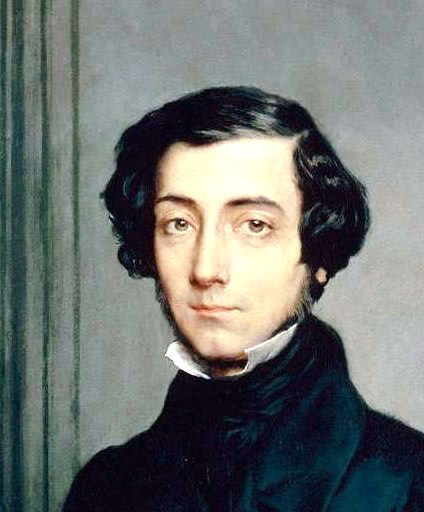
Alexis de Tocqueville, travelling in America in 1831 and 1832, described a society where equality of condition had gone further than anywhere in Europe and traced its consequences with more care than either its champions or its detractors. He found that equality bred both independence and a new kind of conformity, and that its most dangerous tendency was to leave isolated individuals facing a benevolent central power that managed their affairs in exchange for their initiative.
The twentieth-century argument turned technical. The Gini coefficient, devised by Corrado Gini in 1912, gave inequality a number. John Rawls published A Theory of Justice in 1971 and made the redistributive case in its most rigorous form. Robert Nozick answered in Anarchy, State, and Utopia in 1974. Thomas Piketty’s Capital in the Twenty-First Century, published in French in 2013 and in English in 2014, revived the argument with long-run tax data and the claim that returns to capital outrun growth.
The Conservative Position
The first conservative claim is that outcome equality and liberty are in direct conflict. Nozick’s argument is the clearest statement: begin with any distribution you consider just, let a million people each pay a small sum to watch one exceptional athlete, and the pattern is broken by transactions no one can call wrongful. Restoring it means either forbidding those transactions or seizing the proceeds. Since people transact continuously, the interference is continuous.
The second claim is that disparity has many causes and that policy fails when it assumes one. Sowell has assembled the evidence at length: firstborn children are overrepresented among high achievers within the same family and household; a nation’s mountainous or landlocked geography suppresses the exchange that generates prosperity; median age differences between groups account for substantial portions of measured income gaps. None of this denies that discrimination exists or that it produced enormous historical injustice. It denies that the residual gap after accounting for everything else can be read directly as a measure of present bias.
The third claim concerns what equalisation costs. Levelling requires an administrative apparatus with the authority to assess, classify, and transfer, and that apparatus acquires interests of its own. It also displaces the institutions that historically moved people out of poverty — the intact family, the congregation, the apprenticeship, the mutual aid society. Conservatives point to the association between family structure and child outcomes as the most consequential and least discussed variable in the entire debate.
The fourth claim is about mobility rather than distribution. What matters morally is whether a person born poor can become prosperous, not whether the ratio between top and bottom deciles has moved. The policies that improve mobility — school choice, occupational licensing reform, stable currency, housing supply, safe streets — differ from those that compress the distribution, and the two goals sometimes work against each other.
Differing Positions
Rawls made the deepest objection. Nobody earns their genetic endowment, their parents, or the country of their birth, and a distribution tracking those accidents has no moral claim on us. From behind a veil of ignorance about one’s own position, rational people would permit inequality only where it improves the lot of the worst off. Conservatives answer that the argument proves too much — it treats talents as collective property — but the challenge remains the serious one.
A second position, argued by Richard Wilkinson and Kate Pickett in The Spirit Level in 2009, holds that the degree of inequality itself damages health, trust, and social cohesion independently of absolute income, so that a wealthy but unequal society performs worse on measurable outcomes than a poorer, flatter one. The statistical claims have been contested at length, and the direction of causation is disputed.
A third holds that concentrated wealth converts into political power through lobbying, campaign finance, and media ownership, so that economic inequality erodes the equality before the law that conservatives say they prize. This is the objection conservatives should find hardest to dismiss, because it is stated in their own terms.
References
- Edmund Burke, Reflections on the Revolution in France (J. Dodsley, 1790).
- Robert Nozick, Anarchy, State, and Utopia (Basic Books, 1974), ch. 7.
- Thomas Sowell, Discrimination and Disparities, revised edition (Basic Books, 2019).
- John Rawls, A Theory of Justice (Harvard University Press, 1971).
You've read articles over the past year
Will you support conservative education?
A gift of any amount helps keep unique explanatory journalism free for all, and
supports our mission to help everyone understand the world, regardless of their
ability to pay.One-time contributors join our community of givers and will be kept
up to date on the journalism that you help keep free.

Westernization
Westernization is the adoption by non-Western societies of institutions, technologies, laws, manners and habits of mind that originated in Western Europe and its colonial offshoots....
War Crime
A war crime is a serious violation of the law of armed conflict for which an individual bears personal criminal responsibility. The category covers the...

Voter ID Laws
Voter identification laws require a person presenting to vote to prove who they are, usually by producing a government-issued document. The requirement is unremarkable across...

Voter Fraud
Voter fraud is the deliberate corruption of an election by unlawful means: impersonating another voter, casting ballots in the name of the dead or the...