
Print
Cite
Feedback
Share
A social safety net is the set of public transfers and services that catch people who fall below a floor of subsistence: unemployment benefits, disability support, old-age pensions, food assistance, and emergency medical care. Conservatives accept the floor. The argument is about how high it sits, who administers it, what it demands in return, and whether it strengthens or displaces the family, congregation, and neighbourhood that carried the same burden first.
The conservative case is not that the poor should be abandoned. It is that a transfer system designed without attention to incentives, to the dignity of work, and to the institutions it competes with will produce more of the dependency it was built to relieve.
Key Takeaways
- Otto von Bismarck built the first national social insurance system: sickness insurance in 1883, accident insurance in 1884, and old-age and disability insurance in 1889.
- England’s Poor Law of 1601 made relief a parish responsibility, financed and administered locally.
- Hayek accepted a guaranteed minimum income as consistent with a free society, distinguishing it from state direction of the economy.2
- Robert Nisbet argued that the modern state absorbs the functions of family, guild, and church, leaving individuals alone before it.1
- Conservatives favour a means-tested floor with work expectations over universal entitlement; the American welfare reform of 1996 is the reference case.
History And Context
Relief of the poor in the English-speaking world began as a parish duty. The Act for the Relief of the Poor of 1601 taxed local ratepayers and put overseers in each parish in charge of the able-bodied and the impotent poor. The Poor Law Amendment Act of 1834 sought to replace outdoor relief with the workhouse, on the theory that relief made less attractive than employment would shrink the rolls. It was harsh, and it was local.
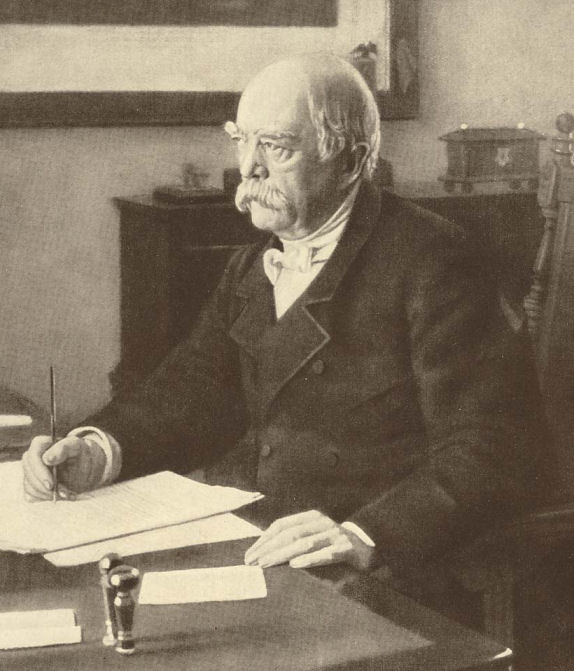
National systems arrived through politics rather than charity. Bismarck’s insurance laws of 1883, 1884, and 1889 were designed to draw German workers away from the Social Democrats by binding them to the Reich. The design proved durable, and it set the pattern for contributory insurance across Europe.
Britain’s Liberal reforms brought old-age pensions in 1908 and national insurance in 1911. William Beveridge’s report of November 1942 proposed a unified scheme against what he called the five giants, and the post-war Attlee government enacted most of it. The United States passed the Social Security Act on 14 August 1935. Canada added Old Age Security in 1952 and the Canada Assistance Plan in 1966.
By the 1980s the American programme called Aid to Families with Dependent Children had become the focus of conservative criticism. Charles Murray’s Losing Ground (1984) argued that the expansion of transfers after 1965 coincided with worsening outcomes for the poor. The Personal Responsibility and Work Opportunity Reconciliation Act, signed 22 August 1996, replaced the entitlement with a time-limited block grant carrying work requirements. Caseloads fell sharply through the late 1990s; the share of that fall attributable to reform rather than to the decade’s labour market remains contested.
The Conservative Position
Conservatives start from what the safety net is for. Its purpose is to prevent destitution, not to equalise outcomes. A floor is a public good; a ceiling is a political project. Once the two are confused, transfer spending becomes an instrument for redistribution rather than for relief, and the coalition that supports it grows to include people who are in no danger of falling.
The second concern is displacement. Nisbet’s argument in The Quest for Community is that the intermediate associations standing between the person and the state — extended family, parish, friendly society, union hall — lose their function when the state assumes it, and having lost their function they wither.1 The conservative objection to a large welfare state is therefore sociological before it is fiscal: the money is recoverable, the institutions are not.
Third, incentives. Withdrawal of benefits as earnings rise creates effective marginal tax rates on the poor that exceed those on the rich, which is why conservatives favour tapered withdrawal, earned income supplements, and work requirements over abrupt cliffs. Thomas Sowell’s long-running argument is that policies must be judged by the behaviour they reward rather than by the intentions announced when they pass.
Fourth, administration. Conservatives prefer relief delivered close to the recipient — by provinces, states, counties, and charities — on the grounds that proximity permits discrimination between cases that a national formula cannot make. This is subsidiarity applied to poverty.
Hayek’s position is instructive because it marks the limit of the objection. He supported a guaranteed minimum for those unable to earn a living, treating it as a condition of a free society rather than a concession to socialism.2 The conservative dispute with the left is about scale, conditionality, and locus of control, not about whether the destitute should be left to starve.
Differing Positions
The universalist case, made most influentially by T. H. Marshall in 1950, treats social provision as a right of citizenship on a par with civil and political rights.4 On this view, means-testing stigmatises recipients, deters take-up among those who qualify, and creates the poverty traps conservatives complain about. Universal programmes command broad political support precisely because the middle class benefits; targeted programmes for the poor become poor programmes.
Beveridge’s own design reflected this logic, favouring flat-rate contributions and flat-rate benefits paid as of right.3 Defenders of the Nordic systems point to high employment rates alongside generous provision as evidence that dependency is not the automatic result of a high floor.
Advocates also argue that work requirements assume jobs exist at wages that support a household, and that the 1996 American reform is credited with employment gains that owed more to the strongest labour market in thirty years than to the statute.
References
- Robert Nisbet, The Quest for Community (Oxford University Press, 1953).
- F. A. Hayek, The Road to Serfdom (Routledge, 1944), ch. 9, “Security and Freedom.”
- William Beveridge, Social Insurance and Allied Services, Cmd. 6404 (HMSO, 1942).
- T. H. Marshall, Citizenship and Social Class and Other Essays (Cambridge University Press, 1950).
- [1] Paitoonpong, Srawooth, Shigeyuki Abe, and Nipon Puopongsakorn. 2008. “The Meaning of ‘Social Safety Nets.’” Journal of Asian Economics 19 (5): 467–73. doi:https://doi.org/10.1016/j.asieco.2008.09.011.
- [2] Ternullo, Stephanie . 2021. “Analysis | Conservatives Don’t Want a Bigger Social Safety Net. But They Do Want to Care for the Needy.” Washington Post, August 2. https://www.washingtonpost.com/politics/2021/08/03/conservatives-dont-want-bigger-social-safety-net-buy-they-do-want-care-needy/.
- [3] Kuo, David. 1997. “Poverty 101: What Liberals and Conservatives Can Learn from Each Other.” Brookings. September 1. https://www.brookings.edu/articles/poverty-101-what-liberals-and-conservatives-can-learn-from-each-other/.
You've read articles over the past year
Will you support conservative education?
A gift of any amount helps keep unique explanatory journalism free for all, and
supports our mission to help everyone understand the world, regardless of their
ability to pay.One-time contributors join our community of givers and will be kept
up to date on the journalism that you help keep free.

Westernization
Westernization is the adoption by non-Western societies of institutions, technologies, laws, manners and habits of mind that originated in Western Europe and its colonial offshoots....
War Crime
A war crime is a serious violation of the law of armed conflict for which an individual bears personal criminal responsibility. The category covers the...

Voter ID Laws
Voter identification laws require a person presenting to vote to prove who they are, usually by producing a government-issued document. The requirement is unremarkable across...

Voter Fraud
Voter fraud is the deliberate corruption of an election by unlawful means: impersonating another voter, casting ballots in the name of the dead or the...