
Print
Cite
Feedback
Share
Sovereignty is the claim that within a given territory there exists a final authority: a body whose decisions are not subject to review by any higher earthly power. Externally it means that a state answers to no superior; internally it means that somewhere in the constitutional order, the buck stops. Conservatives treat sovereignty as the precondition of self-government, because a people that cannot decide its own laws cannot be held responsible for them.
The argument is practical rather than mystical. Accountability requires an address. When authority is dispersed across treaties, courts, and transnational bodies, voters retain the ritual of election while losing the substance of decision, and the resulting gap between what is promised at the hustings and what is possible in office corrodes trust in the whole arrangement.
Key Takeaways
- Jean Bodin gave the concept its modern form in Les Six livres de la République (1576), defining sovereignty as absolute and perpetual power over citizens, unbound by the laws of predecessors.1
- The Peace of Westphalia in 1648 is the conventional marker for a European order of territorially sovereign states.
- A. V. Dicey’s 1885 account of parliamentary sovereignty held that Parliament can make or unmake any law and that no body can override it.2
- The UN Charter of 1945 codified sovereign equality and non-intervention in articles 2(1) and 2(7).3
- Conservatives defend sovereignty as the container of democratic accountability, not as licence for arbitrary rule.
History And Context
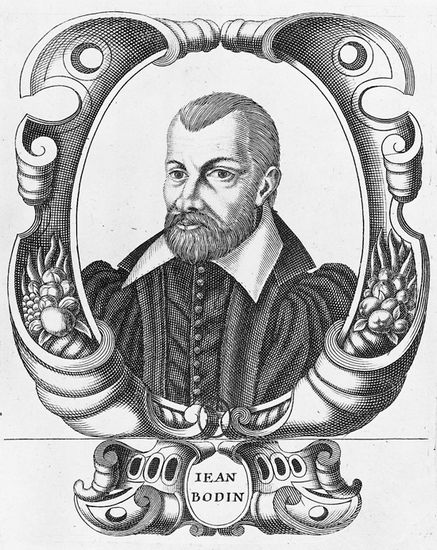
Bodin wrote during the French Wars of Religion, with the massacre of St Bartholomew’s Day in 1572 four years behind him. His problem was disorder: rival confessions each claiming divine warrant for resistance. His answer was to locate an undivided final authority in the sovereign, subject to divine and natural law but to no human superior.
Thomas Hobbes carried the argument further in Leviathan (1651), written during the English Civil War. Where Bodin left the sovereign bound by fundamental law, Hobbes made the sovereign the source of law, on the reasoning that a divided authority is no authority and that civil war is the alternative to obedience.
The Peace of Westphalia in 1648 ended the Thirty Years’ War and, in the standard account, established a system of states recognising each other’s jurisdiction over religion and internal affairs. Historians have qualified the tidiness of that story, but the principle it names — that external powers do not adjudicate a state’s domestic settlement — became the working grammar of European diplomacy.
In England the location of sovereignty moved from Crown to Crown-in-Parliament after 1688. Dicey codified the result two centuries later.2 The United States took a different route, dividing sovereignty between federal and state governments and lodging ultimate authority in a written constitution amendable by the people.
The twentieth century qualified all of it. The UN Charter constrained the use of force while affirming sovereign equality.3 The European Communities, founded by the Treaty of Rome in 1957, developed into a legal order whose direct effect and primacy over national law were established by the European Court of Justice in Van Gend en Loos (1963) and Costa v ENEL (1964). Canada completed its own sovereignty late, patriating its constitution in 1982. The United Kingdom voted to leave the European Union on 23 June 2016 and did so on 31 January 2020, in a campaign whose central slogan was the recovery of control over law, borders, and money.
The Conservative Position
Conservatives defend sovereignty on three grounds.
The first is accountability. A government that can be removed by the people it governs must possess the power to change what the people object to. Where competence has been transferred to a supranational body whose officials no electorate can dismiss, the vote loses its purchase. The complaint is procedural, and it holds whatever the substantive merits of the policies concerned.
The second is legitimacy through allegiance. Roger Scruton argued that democracy presupposes a prior “we” — a body of people who accept each other’s authority to make binding decisions, bound by shared territory, language, law, and history rather than by ideology.4 Nations, on this account, are the largest units in which strangers trust each other enough to accept being outvoted. Institutions built above that level command compliance without commanding loyalty.
The third is competence. Conservatives distrust the transfer of judgment to distant bodies for the same reason they distrust central planning: local knowledge is dispersed, and rules written for a continent fit no part of it well. Subsidiarity — decisions taken at the lowest level capable of taking them — follows from the same premise.
Sovereignty in this tradition is not absolutism. Burke’s constitutionalism, the common law, federal division of powers, and entrenched bills of rights all constrain the sovereign. The conservative claim is narrower: that limits on power should be internal to a self-governing political community rather than imposed on it by bodies it cannot reach.
Differing Positions
Internationalists argue that sovereignty as classically defined has been overtaken by the facts. Capital, carbon, disease, and data cross borders without asking. On this view, states secure more real control by pooling formal authority in institutions capable of acting at the relevant scale — the argument made for the European single market, for arms control treaties, and for the World Trade Organisation.
A second line of criticism concerns atrocity. If sovereignty means no external adjudication of internal affairs, it shields governments that massacre their own populations. The responsibility to protect, endorsed at the 2005 World Summit, recast sovereignty as conditional on a state’s protection of its people. Rwanda in 1994 is the standing case for the prosecution.
A third argument holds that pooling is itself a sovereign act. A state that ratifies a treaty exercises sovereignty rather than surrendering it, and retains the power to withdraw — as the United Kingdom demonstrated. Conservatives reply that the right of exit is a poor substitute for ongoing control, since the cost of leaving rises the longer the arrangement lasts.
References
- Jean Bodin, Les Six livres de la République (1576), bk. I, ch. 8.
- A. V. Dicey, Lectures Introductory to the Study of the Law of the Constitution (Macmillan, 1885), pt. I; retitled Introduction to the Study of the Law of the Constitution from the third edition of 1889.
- Charter of the United Nations (1945), arts. 2(1) and 2(7).
- Roger Scruton, The Need for Nations (Civitas, 2004).
- [1] Philpott, Daniel. 1995. “Sovereignty: An Introduction and Brief History.” Journal of International Affairs 48 (2): 353–68. https://www.jstor.org/stable/24357595.
- [2] Heinisch, Reinhard, Annika Werner, and Fabian Habersack. 2019. “Reclaiming National Sovereignty: The Case of the Conservatives and the Far Right in Austria.” European Politics and Society, June, 1–19. doi:https://doi.org/10.1080/23745118.2019.1632577.
You've read articles over the past year
Will you support conservative education?
A gift of any amount helps keep unique explanatory journalism free for all, and
supports our mission to help everyone understand the world, regardless of their
ability to pay.One-time contributors join our community of givers and will be kept
up to date on the journalism that you help keep free.

Westernization
Westernization is the adoption by non-Western societies of institutions, technologies, laws, manners and habits of mind that originated in Western Europe and its colonial offshoots....
War Crime
A war crime is a serious violation of the law of armed conflict for which an individual bears personal criminal responsibility. The category covers the...

Voter ID Laws
Voter identification laws require a person presenting to vote to prove who they are, usually by producing a government-issued document. The requirement is unremarkable across...

Voter Fraud
Voter fraud is the deliberate corruption of an election by unlawful means: impersonating another voter, casting ballots in the name of the dead or the...