
Print
Cite
Feedback
Share
Supreme Court reform means changing the composition, tenure, jurisdiction, or procedures of the United States Supreme Court by ordinary legislation or constitutional amendment. The proposals in circulation include expanding the bench beyond nine justices, imposing eighteen-year terms with staggered appointments, stripping the Court of jurisdiction over particular subjects, requiring a supermajority to void a federal statute, and binding the justices to an enforceable ethics code. Nearly all of the current momentum comes from the political left, and the trigger was the arrival of a six-to-three conservative majority between 2017 and 2020.
Conservatives oppose the main proposals and give a structural reason for doing so. A court that can be enlarged whenever its rulings displease the governing party is not a court. The nine-justice bench has stood since 1869, and its stability, rather than any provision of the Constitution, is what allows the Court to rule against the government that appointed its members.
Key Takeaways
- The Constitution fixes neither the size of the Court nor the qualifications of its members; Congress set the number at nine in the Judiciary Act of 1869.
- Court size changed seven times between 1789 and 1869, always as a by-product of political conflict.
- Franklin Roosevelt’s 1937 plan to add up to six justices was defeated in a Senate controlled by his own party.
- Conservatives distinguish reforms that entrench independence, such as fixed terms, from reforms that subordinate the Court to a legislative majority.
- Term limits attract more cross-partisan support than court expansion and face a harder constitutional obstacle.
History And Context
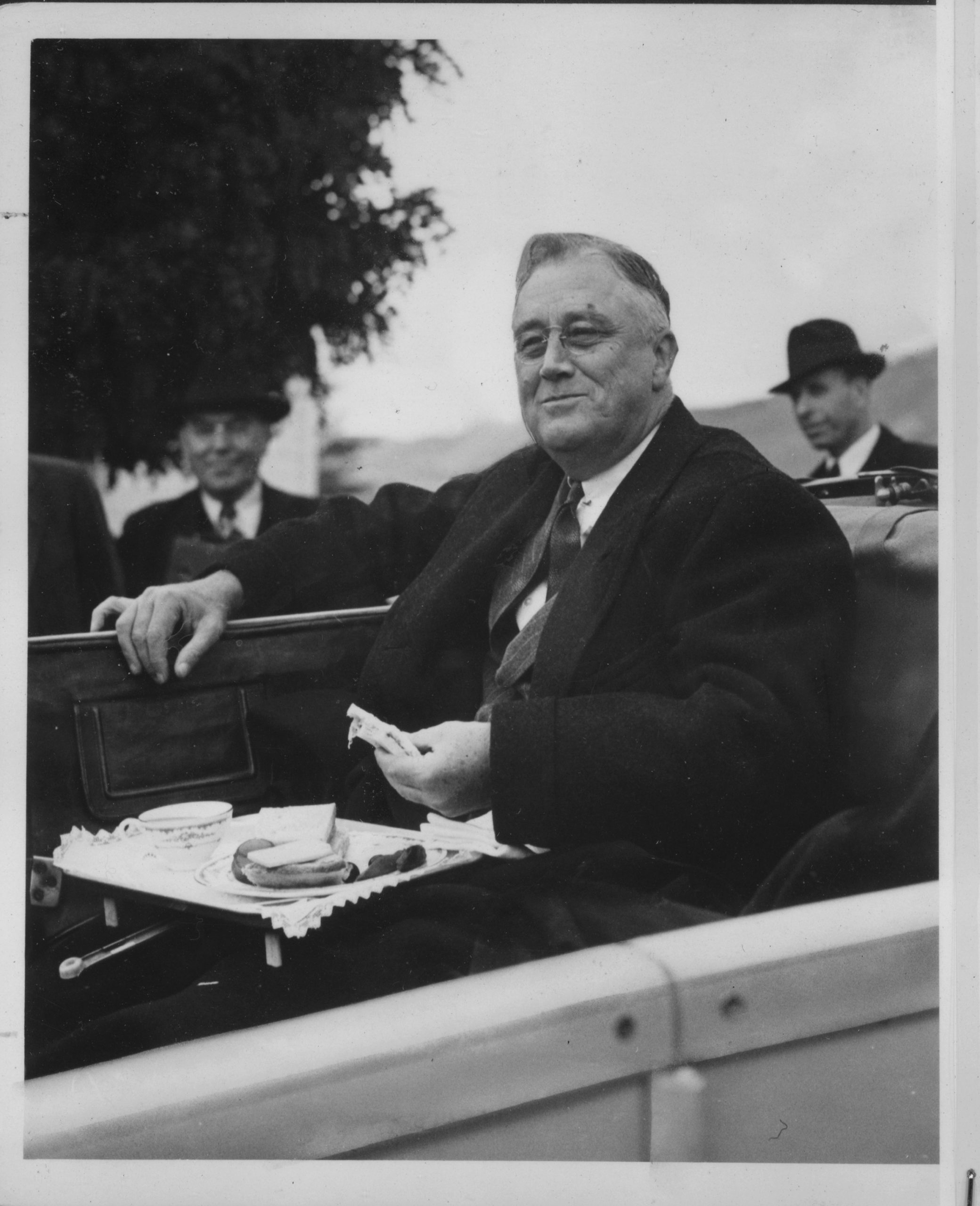
The Judiciary Act of 1789 created a Court of six: a chief justice and five associates. The number moved with the political weather. The outgoing Federalists reduced it to five in 1801 to deny Thomas Jefferson an appointment; the incoming Jeffersonians repealed that within a year. Congress raised the number to seven in 1807 and to nine in 1837 as new circuits were added in the west, and to ten in 1863 during the Civil War. In 1866 a Republican Congress hostile to Andrew Johnson shrank the bench to seven by attrition so that he could appoint nobody. After Ulysses Grant took office the Judiciary Act of 1869 set the number at nine, where it has stayed for over a century and a half.
The defining episode is Franklin Roosevelt’s Judicial Procedures Reform Bill of February 1937. The Court had struck down major New Deal legislation, including the National Industrial Recovery Act in Schechter Poultry (1935) and the Agricultural Adjustment Act in Butler (1936). Roosevelt, fresh from a forty-six-state landslide, proposed appointing an additional justice for every sitting justice over seventy who declined to retire, up to a maximum bench of fifteen. The stated rationale was the age and workload of the justices; nobody believed it.
The bill died. The Senate Judiciary Committee, controlled by Democrats, reported against it in June 1937 in terms that conservatives have quoted ever since: the measure would subordinate the judiciary to the executive and should be rejected so emphatically that its like would never again be offered. Justice Owen Roberts had by then voted to uphold a state minimum wage in West Coast Hotel v. Parrish (March 1937), and Justice Willis Van Devanter announced his retirement in May, giving Roosevelt his appointment by ordinary means. He went on to name eight justices without changing the Court’s size.
The current wave began with the Senate’s refusal to consider Merrick Garland’s nomination in 2016, the confirmations of Neil Gorsuch, Brett Kavanaugh, and Amy Coney Barrett, and the overruling of Roe v. Wade in Dobbs (2022). President Biden’s Presidential Commission on the Supreme Court reported in December 2021 without recommending expansion, noting profound disagreement among its members.4 The Court adopted its first formal code of conduct in November 2023 after disclosure controversies involving Justices Clarence Thomas and Samuel Alito, and the code carries no enforcement mechanism.
The Conservative Position
The conservative case rests on the difference between a rule and a preference. Judicial independence exists only where the political branches cannot adjust the Court to obtain the outcomes they want. Alexander Hamilton argued in Federalist 78 that the judiciary, holding neither purse nor sword, depends for its authority on permanence in office and on the perception that it decides according to law rather than will.1 Expansion by simple majority removes the permanence. Whatever party enlarges the bench establishes the precedent, and the next party enlarges it again; after two cycles the Court is an appendage of whoever last won an election.
Conservatives add a second argument about the function of judicial review. The Court’s job in the constitutional design is to enforce limits against majorities, including large and sincere ones. Reforms justified by the Court’s unpopularity therefore invert the design: an institution built to be countermajoritarian is being asked to answer to the majority that it exists to check. Justice Robert Jackson made the classic statement of this idea in West Virginia State Board of Education v. Barnette (1943), holding that the purpose of a bill of rights is to withdraw certain subjects from the vicissitudes of political controversy and place them beyond the reach of majorities. Antonin Scalia built his case for originalism on the same foundation: a text fixed in meaning is worth nothing if the tribunal enforcing it can be reconstituted at will.2
Conservatives also contest the premise that the Court is uniquely out of step. The Court has invalidated federal statutes at a low rate historically, and its docket is dominated by unanimous and lopsided rulings; the six-to-three cases are a minority of the total. Robert Bork’s account of judicial politics is relevant here: the pressure to reform arrives when a court stops delivering results a governing coalition expected, and the constitutional argument is assembled afterwards.3
On specific proposals, conservatives divide. Court expansion is rejected almost universally on the right. Jurisdiction stripping under Article III has some conservative history, having been proposed against desegregation and school prayer rulings in the 1950s and 1980s, and most conservatives now treat it as equally corrosive. Eighteen-year staggered terms attract genuine conservative support, including from figures on the originalist right, because the reform applies prospectively, treats both parties alike, and would end the practice of timing retirements and appointing young judges for maximum duration. The obstacle is that Article III grants tenure during good behaviour, which most scholars read as requiring an amendment.
Differing Positions
Reform advocates argue that the current Court is itself the product of departures from norm. Republicans held a seat open for 293 days in 2016 on the ground that a presidential election was imminent, then confirmed a justice eight days before the 2020 election. On this account expansion does not break a settlement; it responds to one already broken.
A second argument is democratic. Justices serving into their eighties, appointed by presidents who lost the popular vote and confirmed by senators representing a minority of the population, exercise final authority over abortion, firearms, environmental regulation, and voting rules. Reformers point out that no other advanced democracy combines life tenure with judicial review of this scope: Germany’s constitutional court uses twelve-year non-renewable terms, and most European constitutional courts have mandatory retirement ages.
A third position accepts the conservative worry about expansion and presses the ethics case instead. Binding recusal standards, an enforceable conduct code, and gift and travel disclosure requirements comparable to those covering other federal judges would leave composition untouched while addressing the specific conduct that drove public confidence in the Court to record lows in Gallup polling after 2021.
References
- Alexander Hamilton, Federalist No. 78 (1788), in Hamilton, Madison and Jay, The Federalist (J. and A. McLean, 1788).
- Antonin Scalia, A Matter of Interpretation: Federal Courts and the Law (Princeton University Press, 1997).
- Robert H. Bork, The Tempting of America: The Political Seduction of the Law (Free Press, 1990).
- Presidential Commission on the Supreme Court of the United States, Final Report (Washington, D.C., December 2021).
You've read articles over the past year
Will you support conservative education?
A gift of any amount helps keep unique explanatory journalism free for all, and
supports our mission to help everyone understand the world, regardless of their
ability to pay.One-time contributors join our community of givers and will be kept
up to date on the journalism that you help keep free.

Westernization
Westernization is the adoption by non-Western societies of institutions, technologies, laws, manners and habits of mind that originated in Western Europe and its colonial offshoots....
War Crime
A war crime is a serious violation of the law of armed conflict for which an individual bears personal criminal responsibility. The category covers the...

Voter ID Laws
Voter identification laws require a person presenting to vote to prove who they are, usually by producing a government-issued document. The requirement is unremarkable across...

Voter Fraud
Voter fraud is the deliberate corruption of an election by unlawful means: impersonating another voter, casting ballots in the name of the dead or the...