
Print
Cite
Feedback
Share
The Constitution of the United States is the oldest written national constitution still in force. Fifty-five delegates drafted it in Philadelphia between 25 May and 17 September 1787, thirty-nine signed it, and it took effect on 4 March 1789. It runs to about 4,400 words in its original form and has been amended twenty-seven times, ten of those in a single act of ratification in December 1791.
Conservatives treat the document as the central achievement of Anglo-American political practice, and they treat it that way for a specific reason. It is not a statement of aspirations. It is a machine for dividing power among rival institutions on the assumption that the men filling them will be ambitious, self-interested, and occasionally corrupt. The framers designed for the government they expected rather than the one they hoped for, and that pessimism is what conservatives admire.
Key Takeaways
- Drafted at the Philadelphia Convention, 25 May to 17 September 1787; ratified 21 June 1788 and in operation from 4 March 1789.
- The ninth state, New Hampshire, ratified on 21 June 1788, meeting the threshold set by Article VII.
- The Bill of Rights, the first ten amendments, was ratified on 15 December 1791.
- Separation of powers, federalism, and enumerated powers are the three structural devices; the rights provisions came later and were initially thought unnecessary.
- The governing conservative dispute is not whether to follow the text but how to read it: originalism against the living constitution.
History And Context
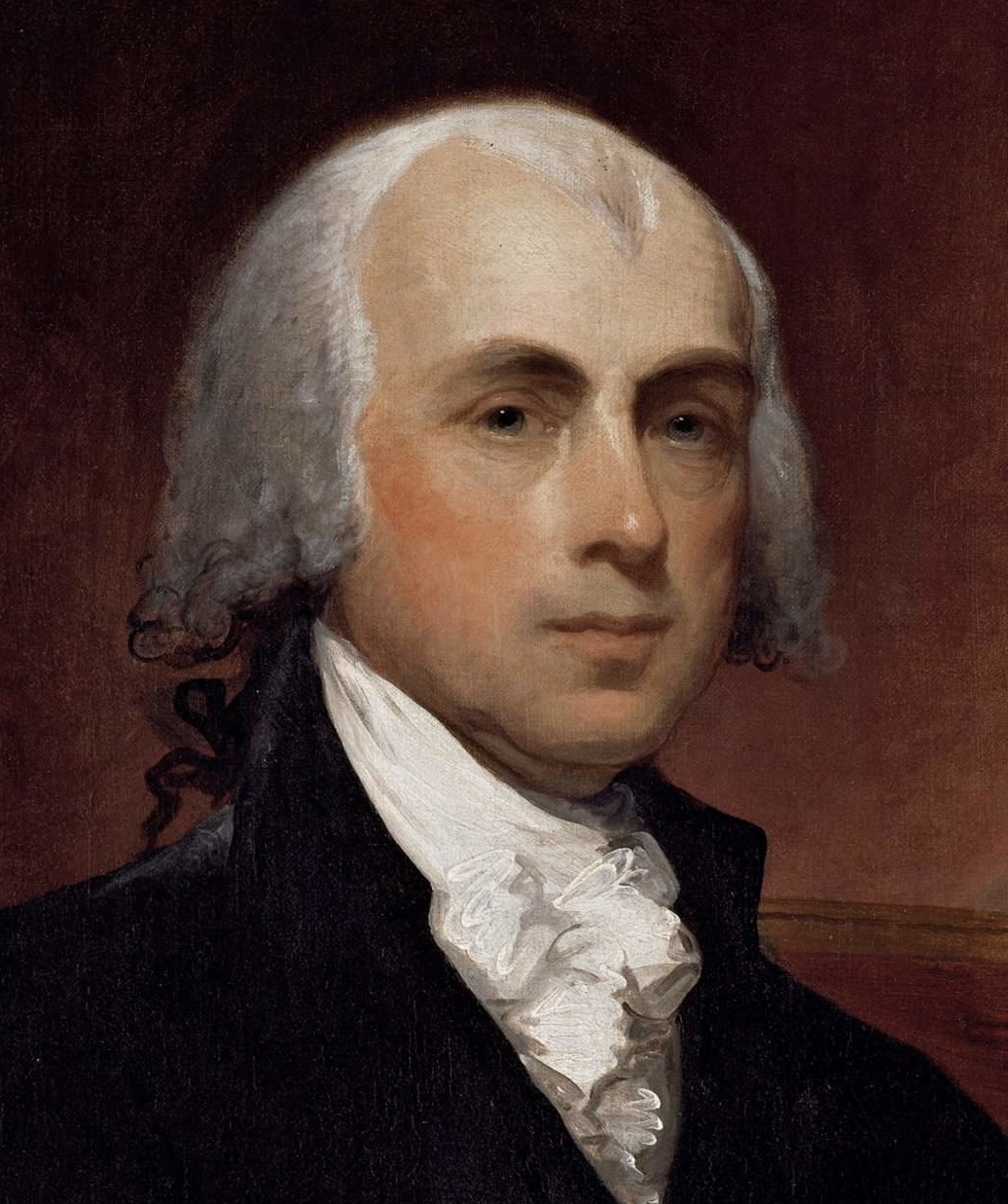
The Articles of Confederation, in force from 1781, gave Congress no power to tax, no executive, and no national judiciary, and required unanimity to amend. Shays’s Rebellion in western Massachusetts over the winter of 1786 and 1787, in which indebted farmers shut courts and attacked the Springfield armory, persuaded a decisive number of men that the arrangement had failed.
The convention met at the Pennsylvania State House with George Washington in the chair and the proceedings closed to the public. The Virginia Plan proposed representation by population in both chambers; the New Jersey Plan proposed equality among states; the Connecticut Compromise of July 1787 produced the House and the Senate. The three-fifths clause in Article I, Section 2 and the twenty-year protection of the slave trade in Article I, Section 9 were the price of southern signatures, and they carried the country to war seventy-four years later.
Ratification was contested and close. Between October 1787 and August 1788 Alexander Hamilton, James Madison, and John Jay published eighty-five essays in New York newspapers under the name Publius. Madison’s Federalist No. 51 set out the design principle: because men are not angels, ambition must be made to counteract ambition, and the interest of the officeholder must be attached to the constitutional rights of his office.1 The Anti-Federalists, writing as Brutus and the Federal Farmer, argued that a republic could not govern so large a territory without collapsing into consolidation, and they extracted the promise of a bill of rights as the condition of ratification. Massachusetts ratified in February 1788, New Hampshire in June, and New York and Virginia followed narrowly.
Two later developments completed the structure. Marbury v. Madison in 1803 established that the courts would decline to give effect to statutes repugnant to the Constitution. The Civil War amendments of 1865 to 1870 abolished slavery and turned the federal government into a guarantor of rights against the states, reversing the original direction of the document’s suspicion.
The Conservative Position
Conservatives hold, first, that the document’s value lies in its structure rather than its rights clauses. Separation of powers, bicameralism, the veto, staggered Senate terms, the amendment threshold of Article V, and the reservation of undelegated powers to the states in the Tenth Amendment are devices for slowing government down. Slowness is the point. A measure that survives three institutions, two chambers, and an interval of years has been tested against something more than a temporary majority. Montesquieu supplied the theory in 1748; the framers supplied the engineering.
Second, conservatives hold that a written constitution binds only if its words carry a fixed meaning. This is the originalist claim, developed by Robert Bork in the 1970s and 1980s and given its mature form by Antonin Scalia, who argued that the object of interpretation is the meaning the text bore to a competent speaker at the time of its adoption, not the intentions locked in the framers’ heads and not the judge’s estimate of present need.2 The alternative, on this account, is not interpretation at all but amendment by judiciary, which bypasses Article V and removes contested questions from the electorate.
Third, conservatives read the Constitution as a document that assumes a prior moral inheritance rather than creating one. Russell Kirk argued that the American order rests on older foundations: the common law, the Protestant conscience, the customs of English liberty, and the classical idea of virtue, and that the paper machinery works only in a people already formed by them.3 On this view a constitution is a boundary condition on a functioning culture, not a substitute for one.
Differing Positions
The living constitution position, argued by Justice William Brennan in a Georgetown address in October 1985 and elaborated by scholars including David Strauss, holds that the text was drafted in broad language by men who anticipated changed circumstances, and that fidelity to it requires applying its principles to conditions the founders could not have foreseen. Cruel and unusual punishment, equal protection, and unreasonable searches do not carry self-executing eighteenth-century definitions.
A second criticism is democratic rather than interpretive. The Senate gives Wyoming the same weight as California; the Electoral College has twice in recent decades produced a president who lost the popular vote; Article V makes amendment so difficult that the document has changed little since 1971. Constitutional scholars including Sanford Levinson argue that the structure now entrenches minority rule rather than restraining majority passion.4
A third criticism is historical. The original document protected slavery, and its provisions on representation counted human beings as property for the benefit of their owners. Critics hold that veneration of the founding text requires an act of forgetting, and that the Constitution worth defending is the one substantially rewritten between 1865 and 1870 and again in the twentieth century.
References
- James Madison, The Federalist, No. 51 (1788).
- Antonin Scalia, A Matter of Interpretation: Federal Courts and the Law (Princeton University Press, 1997).
- Russell Kirk, The Roots of American Order (Open Court, 1974).
- Sanford Levinson, Our Undemocratic Constitution (Oxford University Press, 2006).
You've read articles over the past year
Will you support conservative education?
A gift of any amount helps keep unique explanatory journalism free for all, and
supports our mission to help everyone understand the world, regardless of their
ability to pay.One-time contributors join our community of givers and will be kept
up to date on the journalism that you help keep free.

Westernization
Westernization is the adoption by non-Western societies of institutions, technologies, laws, manners and habits of mind that originated in Western Europe and its colonial offshoots....
War Crime
A war crime is a serious violation of the law of armed conflict for which an individual bears personal criminal responsibility. The category covers the...

Voter ID Laws
Voter identification laws require a person presenting to vote to prove who they are, usually by producing a government-issued document. The requirement is unremarkable across...

Voter Fraud
Voter fraud is the deliberate corruption of an election by unlawful means: impersonating another voter, casting ballots in the name of the dead or the...