
Print
Cite
Feedback
Share
Traditional conservatism holds that a society is an inheritance rather than a design, and that the institutions people are born into — family, church, locality, law, trade, and nation — carry practical knowledge no theorist could reconstruct from first principles. Its founding text in English is Edmund Burke’s Reflections on the Revolution in France (1790), written against men who believed a constitution could be drawn up in a season and imposed on a people who had not asked for it.1
The position is not a preference for the past. It is a claim about knowledge: that the accumulated judgement embedded in surviving institutions is more reliable than the reasoning of any one generation, and that reformers who cannot say why an arrangement exists have not earned the right to abolish it.
Key Takeaways
- Burke’s Reflections (1790) supplied the tradition’s founding argument, written fifteen months after the fall of the Bastille and three years before the Terror.
- The core claim is epistemic: institutions encode knowledge that individuals cannot derive by reasoning alone.
- Society is a partnership across generations, which places obligations on the living toward both the dead and the unborn.
- Traditional conservatism resists the political rationalism Michael Oakeshott identified as the modern political disease — governing from abstract principle rather than intimation and precedent.3
- It differs from libertarianism, which grounds politics in individual liberty, and from progressivism, which treats inherited arrangements as obstacles to a designed future.
History And Context
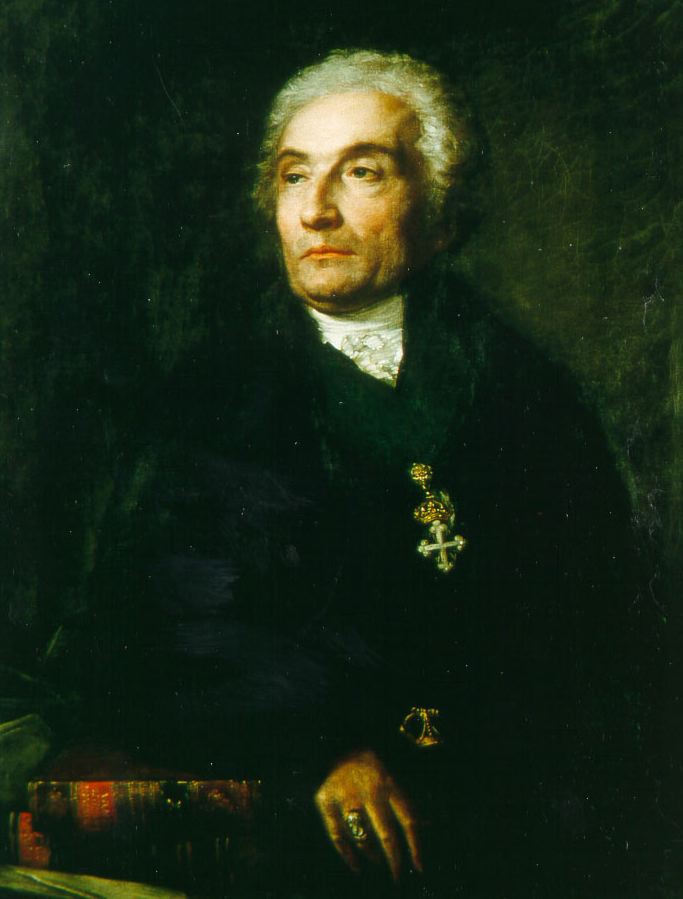
Burke was an Irish-born Whig MP who had spent his career opposing arbitrary power: he defended the American colonists against parliamentary taxation, pressed the impeachment of Warren Hastings over the government of Bengal through a trial that ran from 1788 to 1795, and worked for the relief of Irish Catholics. His break with reformist opinion came in November 1790, when he published a book arguing that the French had not reformed their constitution but destroyed it, replacing an intelligible order of estates, church, and law with a paper scheme resting on nothing.
On the continent the reaction took a harder form. Joseph de Maistre, who fled Savoy in September 1792 and wrote from exile in Lausanne and later St Petersburg, defended throne and altar in terms Burke would not have used, grounding sovereignty in divine appointment and treating the Revolution as a providential punishment. The Anglo-American line stayed closer to Burke: Samuel Taylor Coleridge on the national church, Benjamin Disraeli on the obligations of property, and in the United States John Adams and later John Randolph of Roanoke.
The tradition was reassembled in America after the Second World War. Richard Weaver’s Ideas Have Consequences (1948) traced the modern disorder to the late medieval abandonment of universals. Russell Kirk’s The Conservative Mind (1953) gave the movement a lineage running from Burke through John Adams, Coleridge, Tocqueville, and T. S. Eliot, and made the case that conservatism was a body of sentiments rather than a programme.2 Robert Nisbet supplied the sociology in the same year. Michael Oakeshott, from a different direction, argued that the characteristic modern error was rationalism in politics: the belief that practical activity can be reduced to technique and applied by anyone holding the manual.3
The Conservative Position
The first commitment is to prescription. An arrangement that has lasted has been tested by circumstances nobody planned for, and its survival is evidence of a fit between it and human nature that a written justification cannot supply. This is why Burkeans ask reformers to explain the function of what they intend to remove before removing it.
The second is the partnership across generations. Burke described society as a contract between those living, those dead, and those yet to be born. The living hold their institutions in trust, which rules out both the revolutionary claim that each generation may remake the world and the commercial claim that anything may be sold if the current owners consent.
The third is the priority of the small association. Family, parish, guild, and town are where character is formed and where most obligations are actually discharged. Conservatives resist the transfer of those functions to central administration, not because the state performs them badly in every case, but because a population that has lost the habit of self-government cannot recover it on demand.
The fourth is the acceptance of human limitation. Original sin in the theological register, imperfect knowledge in the secular one: people are not reliably good, and are not clever enough to run a society from a central office. Institutions that assume otherwise fail, and the failures are paid for by the people who had the least say in the design.
Differing Positions
Libertarians accept much of the diagnosis and reject the conclusion. Their argument is that traditional conservatism defends whatever happens to exist, including guilds, established churches, and hierarchies that restrict individual freedom, and that the test of an institution should be whether it rests on voluntary agreement. F. A. Hayek’s essay “Why I Am Not a Conservative” (1960) made the objection precisely: the conservative has no principle by which to distinguish the inherited arrangements worth keeping from those worth abolishing, and so does no more than slow whatever direction others have chosen.4
Progressives press the opposite charge. Inherited institutions distributed advantage and disadvantage before anyone alive could consent, and a doctrine of prescription converts historical injustice into a settled claim. On this account the appeal to accumulated wisdom protects the interests of those the arrangement suited.
Conservatives answer Hayek by pointing at the standard he says they lack: the tradition contains its own criteria — natural law, common law liberty, Christian anthropology — by which parts of an inheritance are judged and reformed, which is how abolition was argued in Britain by men who were not radicals. To the progressive they answer that reform conducted without regard for what an institution does tends to destroy the protections of the weak first, since those are the parts of an inheritance least visible to the people who administer the change.
References
- Edmund Burke, Reflections on the Revolution in France (J. Dodsley, 1790).
- Russell Kirk, The Conservative Mind: From Burke to Santayana (Henry Regnery, 1953).
- Michael Oakeshott, “Rationalism in Politics,” in Rationalism in Politics and Other Essays (Methuen, 1962).
- F. A. Hayek, “Why I Am Not a Conservative,” postscript to The Constitution of Liberty (University of Chicago Press, 1960).
You've read articles over the past year
Will you support conservative education?
A gift of any amount helps keep unique explanatory journalism free for all, and
supports our mission to help everyone understand the world, regardless of their
ability to pay.One-time contributors join our community of givers and will be kept
up to date on the journalism that you help keep free.

Westernization
Westernization is the adoption by non-Western societies of institutions, technologies, laws, manners and habits of mind that originated in Western Europe and its colonial offshoots....
War Crime
A war crime is a serious violation of the law of armed conflict for which an individual bears personal criminal responsibility. The category covers the...

Voter ID Laws
Voter identification laws require a person presenting to vote to prove who they are, usually by producing a government-issued document. The requirement is unremarkable across...

Voter Fraud
Voter fraud is the deliberate corruption of an election by unlawful means: impersonating another voter, casting ballots in the name of the dead or the...