
Print
Cite
Feedback
Share
Tribalism is loyalty organised around descent, and it is the oldest political arrangement there is. A tribe answers the first question any society must answer — who is one of us — by pointing to blood, lineage and shared ancestors rather than to law, territory or consent. In contemporary argument the word is used two ways: as a description of societies still ordered by kinship, and as an accusation levelled at political factions that treat opponents as enemies of the group rather than holders of a wrong opinion.
Conservatives occupy an awkward and defensible position here. They defend particular loyalties — to family, locality, nation — against the claim that only universal principles deserve allegiance. They also insist that these loyalties differ from tribalism, and that the difference is the whole achievement of Western political order.
Key Takeaways
- Ibn Khaldūn analysed group feeling, asabiyyah, as the engine of political rise and decay in 1377, four centuries before European sociology took up the question.
- Tribal solidarity assigns status by descent; civic order assigns it by law applied to individuals.
- Burke’s “little platoon” defends local attachment while rejecting the tribal claim that kinship overrides justice.
- Conservatives read identity politics as a return of tribal categories under progressive vocabulary.
- Critics answer that “tribalism” is applied selectively, describing minority solidarity as pathology and majority solidarity as patriotism.
History And Context
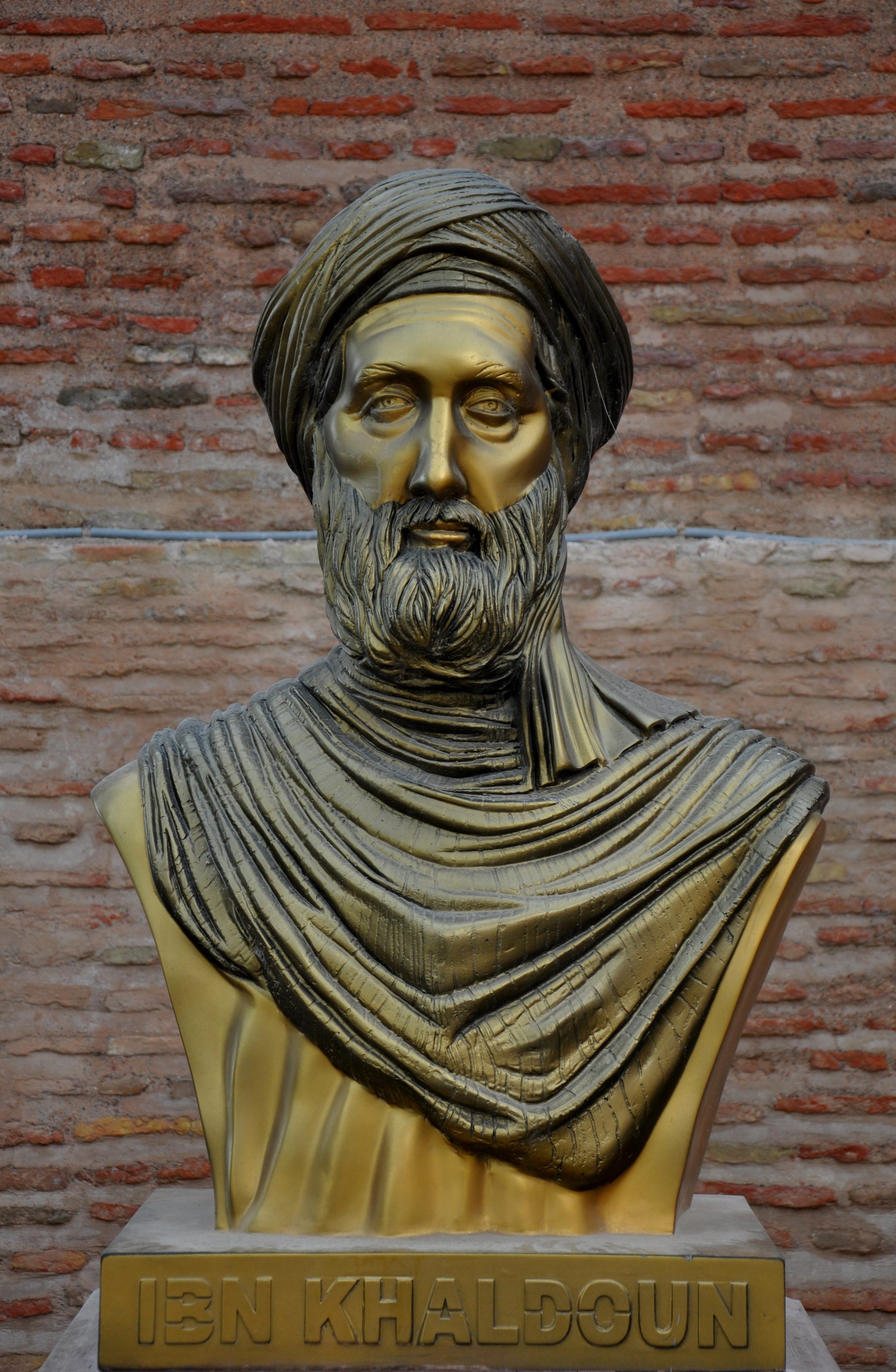
The first sustained theory belongs to Ibn Khaldūn, the Tunisian-born jurist and historian who wrote the Muqaddimah in 1377 while in retreat at Qalat Ibn Salama in what is now Algeria. He argued that desert tribes develop intense group cohesion through hardship and shared descent, that this cohesion allows them to conquer settled cities, and that the luxury of urban rule dissolves it within roughly four generations, at which point a new tribe arrives from the margins.1 The cycle explained the succession of North African dynasties he had served and watched fall.
European thought approached the subject differently. Aristotle’s Politics traced the polis from household to village to city, treating the transition as one from natural kinship to political association among citizens. Roman law completed the move by making citizenship a legal status extendable to conquered peoples, a device that made an empire out of a city.
Nineteenth-century anthropology turned tribe into a technical term. Lewis Henry Morgan’s Ancient Society of 1877 arranged human groups on a ladder from savagery through barbarism to civilisation, with tribal organisation fixed near the bottom. Colonial administrations then applied the category to peoples whose actual structures did not fit it, and the resulting classifications hardened into the ethnic boundaries that later fuelled post-colonial conflict. Franz Boas and his students had dismantled the evolutionary scheme by the 1920s, and anthropology abandoned it outright after 1945, but the word kept its pejorative charge, which is why it now does double duty as description and insult.
The Conservative Position
Conservatives begin by refusing the choice between tribalism and abstraction. Burke’s argument in 1790 was that attachment to the small unit — the family, the parish, the regiment — is the school in which wider loyalty is learned, and that a man who claims to love humanity while feeling nothing for his neighbours loves nothing at all.2 The little platoon is not a tribe. It is a particular attachment that coexists with, and is disciplined by, a law that applies to strangers on the same terms.
That discipline is the point. The conservative case for the nation-state rests on its having solved a problem tribes cannot solve: it extends membership beyond kinship while keeping loyalty concrete enough to command sacrifice. Roger Scruton called the resulting attachment oikophilia, love of home, developing the term at length in Green Philosophy in 2012, and distinguished it from ethnic exclusivity by its territorial and legal basis — the nation admits the stranger who settles, obeys the law and adopts the loyalty.3 A tribe cannot.
Applied to contemporary politics, the argument produces a criticism of identity movements on the left. Where entitlements, credibility and moral standing are assigned by ancestral category, the civic achievement runs backwards: the individual is judged by descent again. Thomas Sowell’s comparative work on ethnic groups makes the empirical version of the case, tracing how group outcomes track transmitted skills and cultural inheritance rather than the categories political actors construct from them.4
Conservatives also apply the criticism to their own side. Ethno-nationalism that defines the nation by blood abandons the legal conception of membership that made the nation superior to the tribe, and inherits every weakness of the arrangement it imitates.
Differing Positions
The strongest reply is that “tribalism” is a word deployed asymmetrically. Solidarity among a minority facing discrimination gets called tribal; the same solidarity in a majority gets called national feeling. On this reading the term functions to delegitimise organised self-defence by the weak while leaving the strong undescribed.
Amy Chua argued in 2018 that the tribal instinct is universal and that American elites, committed to an individualist self-image, systematically failed to see it — in Vietnam, in Iraq, and finally at home.5 Her conclusion is not that tribalism should be praised but that pretending it away guarantees being blindsided by it.
Left critics press further: what conservatives call inherited loyalty is a construct too, assembled by nineteenth-century states through conscription, standardised schooling and national newspapers. If the nation was built, it can be rebuilt on wider terms.
The conservative answer accepts the history and denies the inference. Loyalties that were constructed still function, and the ones that have proven capable of holding a diverse population together under a common law are the ones worth conserving.
References
- Ibn Khaldūn, The Muqaddimah: An Introduction to History, trans. Franz Rosenthal (Pantheon/Bollingen, 1958; abridged ed. Princeton University Press, 1967), chs. 2–3.
- Edmund Burke, Reflections on the Revolution in France (J. Dodsley, 1790).
- Roger Scruton, Green Philosophy: How to Think Seriously About the Planet (Atlantic Books, 2012), ch. 7; and How to Be a Conservative (Bloomsbury, 2014), ch. 2.
- Thomas Sowell, Race and Culture: A World View (Basic Books, 1994), ch. 1.
- Amy Chua, Political Tribes: Group Instinct and the Fate of Nations (Penguin Press, 2018), introduction.
You've read articles over the past year
Will you support conservative education?
A gift of any amount helps keep unique explanatory journalism free for all, and
supports our mission to help everyone understand the world, regardless of their
ability to pay.One-time contributors join our community of givers and will be kept
up to date on the journalism that you help keep free.
Westernization
Westernization is the adoption by non-Western societies of institutions, technologies, laws, manners and habits of mind that originated in Western Europe and its colonial offshoots....
War Crime
A war crime is a serious violation of the law of armed conflict for which an individual bears personal criminal responsibility. The category covers the...

Voter ID Laws
Voter identification laws require a person presenting to vote to prove who they are, usually by producing a government-issued document. The requirement is unremarkable across...

Voter Fraud
Voter fraud is the deliberate corruption of an election by unlawful means: impersonating another voter, casting ballots in the name of the dead or the...