
Print
Cite
Feedback
Share
The war on drugs is the name given to the campaign of prohibition, interdiction and criminal enforcement that the United States has pursued against narcotics since Richard Nixon declared drug abuse “public enemy number one” in June 1971, and that most Western governments adopted in some form. Its instruments are federal scheduling, mandatory minimum sentences, border and maritime interdiction, crop eradication abroad, and the police powers built to support all four.
Conservatives are divided on it more sharply than on almost any other question of law and order. One camp holds that a society has both the right and the duty to suppress substances that destroy the people who use them and the neighbourhoods they live in. The other holds that half a century of enforcement has produced a vast federal apparatus, a militarised police, and no reduction in supply — a policy that fails the conservative test of judging institutions by what they actually do.
Key Takeaways
- Nixon declared drug abuse the country’s chief public enemy in June 1971 and created the Drug Enforcement Administration in July 1973.
- The Anti-Drug Abuse Act of 1986 introduced mandatory minimums and the 100-to-1 sentencing disparity between crack and powder cocaine, reduced to 18-to-1 by the Fair Sentencing Act of 2010.
- The US prison population rose from roughly 330,000 in 1980 to over 1.5 million by 2009, with drug offences the largest single driver of federal growth.
- Traditionalist conservatives defend prohibition on the ground that law teaches as well as punishes.
- Libertarian and fusionist conservatives, including William F. Buckley Jr. and Milton Friedman, concluded that the policy costs more in liberty and law-enforcement corruption than it recovers in reduced use.
History And Context
American drug prohibition began with the Harrison Narcotics Tax Act of 1914, which regulated opiates and cocaine through the taxing power because Congress doubted it held a general police power. Harry Anslinger, appointed first Commissioner of the Federal Bureau of Narcotics in 1930, spent three decades building the enforcement state and campaigning for the Marihuana Tax Act of 1937.
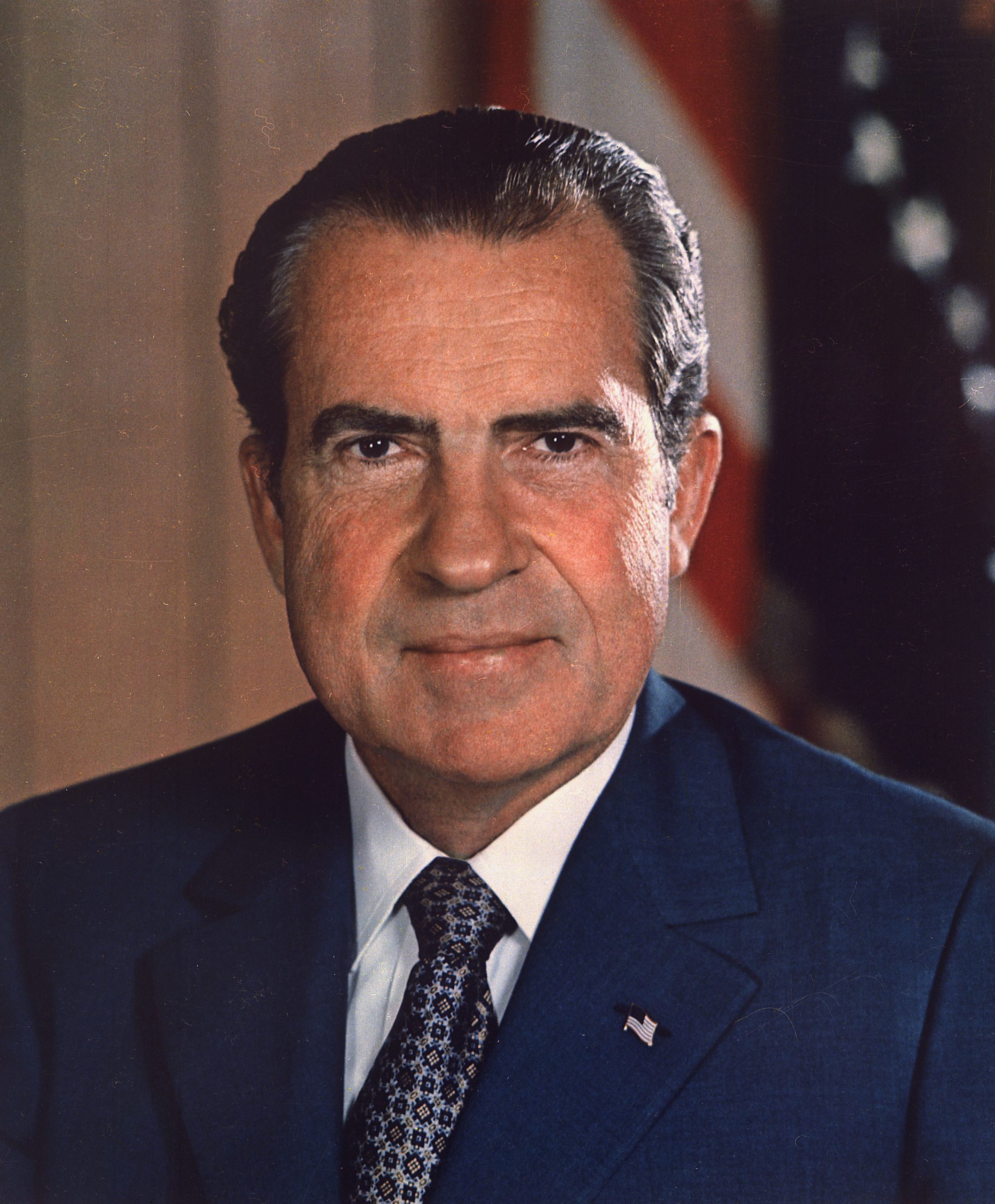
The modern phase began under Nixon. In a special message to Congress on 17 June 1971 he called drug abuse the nation’s most pressing public enemy and asked for money for both enforcement and treatment; his first budget request weighted the balance toward treatment. The Comprehensive Drug Abuse Prevention and Control Act of 1970 had already created the federal drug schedules, placing cannabis in Schedule I pending a commission report. The Shafer Commission recommended decriminalising personal possession in 1972; Nixon rejected the finding.
The escalation came in the 1980s. Congress passed the Anti-Drug Abuse Act on 27 October 1986, four months after the death of the basketball player Len Bias, imposing five- and ten-year mandatory minimums keyed to quantity and treating one gram of crack cocaine as equivalent to a hundred grams of powder. Federal drug prisoners rose from about 4,900 in 1980 to more than 90,000 by 2010. Abroad, Plan Colombia committed some US$10 billion from 2000 onward to eradication and interdiction; total Andean coca cultivation was higher in 2019 than when the programme began, though Colombian output alone had fallen.
Reversal followed. California legalised medical cannabis by ballot in 1996, Colorado and Washington legalised recreational sale in 2012, and Canada legalised nationally in October 2018. The Fair Sentencing Act of 2010 and the First Step Act of 2018 cut federal drug sentences with bipartisan majorities.
The Conservative Position
The traditionalist case rests on what law is for. Statute does not merely deter; it declares what a community counts as intolerable, and repeal teaches as surely as enactment. A society that legalises a drug has said the drug is acceptable, whatever the accompanying warnings claim. On this view the relevant harm is not only the overdose but the slow subtraction of people from work, family and obligation, and government has standing to prevent it. James Q. Wilson made the case in 1990, arguing that legalisation would raise consumption substantially and that the burden would fall on the poorest neighbourhoods, which already carry the cost of addiction and would then carry a larger one.1
The empirical half of the argument holds that prohibition suppresses use through price and availability. Where a substance is illegal, it costs more, is harder to obtain, and carries social stigma; each of those margins keeps some marginal user out.
The opposing conservative case is older than most people assume. William F. Buckley Jr. devoted the February 1996 issue of National Review to the proposition that the war on drugs had failed and should be ended, publishing his own statement alongside those of a federal judge and a police chief.2 Milton Friedman had argued from 1972 that prohibition does not reduce demand but transfers supply to criminals, guarantees violence as the only available means of contract enforcement, and corrupts the police who administer it.3
Both objections are conservative in form. The first is Hayekian: no agency can know enough to suppress a market that millions of people want to exist, and the attempt produces consequences nobody chose. The second is constitutional. Civil asset forfeiture, no-knock warrants, military surplus transfers to local police under the 1033 programme, and the erosion of Fourth Amendment protection through the drug-courier exception were all built to fight this war, and none of them stayed confined to it. A conservative committed to limited government has to count that ledger.
Differing Positions
The progressive critique overlaps with the libertarian one and adds a claim about race. Enforcement fell disproportionately on black Americans despite comparable rates of use across groups, and the crack-powder disparity encoded that outcome in statute for twenty-four years. Michelle Alexander argued in 2010 that mass incarceration functioned as a system of racialised social control succeeding Jim Crow.4
Defenders of enforcement answer that the disparity reflected where violent drug markets operated rather than legislative intent, and note that the 1986 Act passed with substantial support from black members of Congress responding to constituents whose neighbourhoods were under siege.
The strongest argument against wholesale legalisation is the record since 2015. Portugal’s decriminalisation of possession in 2001, paired with expanded treatment, produced falling overdose deaths and is the model most often cited. Oregon’s Measure 110, passed in 2020, decriminalised possession without building the treatment capacity first, and the legislature restored criminal penalties in 2024. The distinction between decriminalising the user and legalising the trade carries most of the weight in this debate, and collapsing the two has cost both sides credibility. Mark Kleiman argued that the choice was never between enforcement and surrender, but between enforcement designed around deterrence and enforcement designed around severity, and that the second was chosen.5
References
- James Q. Wilson, “Against the Legalization of Drugs,” Commentary 89, no. 2 (February 1990).
- William F. Buckley Jr. et al., “The War on Drugs Is Lost,” National Review 48, no. 2 (12 February 1996).
- Milton Friedman, “Prohibition and Drugs,” Newsweek (1 May 1972).
- Michelle Alexander, The New Jim Crow: Mass Incarceration in the Age of Colorblindness (The New Press, 2010), ch. 2.
- Mark A. R. Kleiman, When Brute Force Fails: How to Have Less Crime and Less Punishment (Princeton University Press, 2009), ch. 1.
You've read articles over the past year
Will you support conservative education?
A gift of any amount helps keep unique explanatory journalism free for all, and
supports our mission to help everyone understand the world, regardless of their
ability to pay.One-time contributors join our community of givers and will be kept
up to date on the journalism that you help keep free.

Westernization
Westernization is the adoption by non-Western societies of institutions, technologies, laws, manners and habits of mind that originated in Western Europe and its colonial offshoots....
War Crime
A war crime is a serious violation of the law of armed conflict for which an individual bears personal criminal responsibility. The category covers the...

Voter ID Laws
Voter identification laws require a person presenting to vote to prove who they are, usually by producing a government-issued document. The requirement is unremarkable across...

Voter Fraud
Voter fraud is the deliberate corruption of an election by unlawful means: impersonating another voter, casting ballots in the name of the dead or the...