
Print
Cite
Feedback
Share
Doug Ford is a prominent Canadian politician who has served as the 26th Premier of Ontario since 2018 and the leader of the Progressive Conservative Party of Ontario. From a conservative perspective, Ford is often viewed as a pragmatic and populist leader focused on delivering tangible results, particularly in the economic sphere. His leadership is typically assessed through the lens of his commitment to fiscal responsibility, his efforts to reduce bureaucratic red tape, and his appeal to “the common person,” aligning with core conservative principles of limited government, individual liberty, and economic growth.
Overview
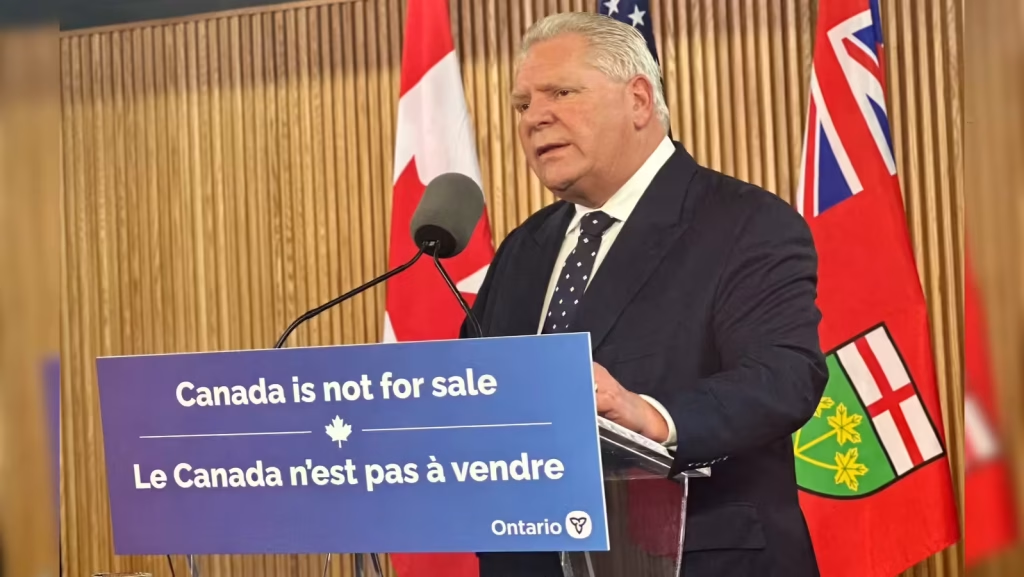
Conservatives in Ontario generally view Doug Ford’s leadership as a decisive shift towards more fiscally conservative governance after years of Liberal rule. His ascent to power was largely propelled by a populist wave, fueled by concerns over government spending, rising taxes, and perceived inefficiencies within the provincial administration. Ford’s political style, often characterized by direct communication and a focus on “common sense” solutions, resonated with many who felt overlooked by the traditional political establishment.
A cornerstone of his appeal to conservatives has been his unwavering commitment to fiscal prudence and tax relief. He campaigned on, and largely pursued, policies aimed at reducing the size and cost of government, cutting taxes for businesses and individuals, and eliminating the provincial deficit. These efforts align closely with the broader conservative tenet that emphasizes prudence in public finance and the belief that lower taxes and responsible spending stimulate economic activity and empower citizens.
Furthermore, Ford’s administration has consistently prioritized reducing bureaucratic red tape and streamlining government processes, arguing that such measures are essential for fostering a more business-friendly environment and unleashing the power of free enterprise. This focus on deregulation and making Ontario a more attractive place for investment resonates with conservatives who believe that minimal government interference leads to greater economic growth and job creation. While Ford’s approach has sometimes been described as less overtly ideological than some other conservative leaders, his supporters often praise his pragmatism as an effective means to achieve conservative outcomes. His focus on infrastructure, manufacturing, and core services, coupled with efforts to control spending, is seen as a practical application of conservative economic principles aimed at strengthening the province’s overall social order through robust economic health.
Core Elements of Conservative Engagement with Doug Ford
Commitment to Fiscal Prudence and Tax Cuts
Doug Ford’s political identity is heavily anchored in his strong commitment to fiscal prudence and the belief that tax cuts stimulate economic activity. For conservatives, his leadership represents a dedication to reducing the financial burden on Ontarians and businesses, which they see as essential for provincial prosperity. His government has pursued policies aimed at controlling government spending, seeking efficiencies within the public sector, and working towards eliminating the provincial deficit. This approach is consistent with the conservative emphasis on fiscal responsibility, arguing that excessive government debt stifles future growth and that lower taxes leave more capital in the hands of individuals and businesses to invest, save, and spend, thereby driving the economy. Conservatives view these actions as a necessary corrective to previous governments’ spending habits, ensuring a more sustainable and prosperous future for the province.
Populist Appeal and “Common Sense” Governance
Doug Ford’s distinctive political style and his emphasis on “common sense” solutions have allowed him to forge a strong populist connection with a significant segment of the conservative base in Ontario. His direct, often unvarnished, communication style is seen by many conservatives as a refreshing departure from traditional political rhetoric, making him relatable to “ordinary Ontarians” who feel unheard by political elites. This populist appeal aligns with a strain of conservatism that views centralized power and large bureaucracies with suspicion, preferring governance that is more responsive to the everyday concerns of citizens. Ford’s frequent promises to fight for the “little guy” and to cut down on bureaucratic inefficiencies resonate with a desire for practical, results-oriented government, consistent with conservative skepticism of utopian schemes and abstract ideologies, favoring pragmatic solutions.
Reducing Red Tape and Bureaucracy
A key and consistent promise of Doug Ford’s government has been the aggressive reduction of bureaucratic “red tape” and streamlining of government processes. For conservatives, this focus is a direct application of the principle of limited government intervention. They believe that excessive regulation burdens businesses, stifles innovation, increases costs, and hinders economic growth. Ford’s initiatives aimed at simplifying regulations across various sectors, from housing development to manufacturing, are seen as crucial for making Ontario more competitive and attractive for investment. This commitment reflects a core conservative belief that removing unnecessary governmental obstacles allows private enterprise to flourish, leading to job creation and increased prosperity, thus strengthening the social order through economic vitality.
Focus on Economic Growth and Attracting Investment
Doug Ford’s government has consistently prioritized economic growth and actively sought to attract business and investment to Ontario. This strong emphasis on a thriving private sector is fundamental to the conservative economic philosophy. Ford’s administration has implemented policies designed to make the province more competitive, including efforts to reduce energy costs, lower business taxes, and streamline regulatory processes. Conservatives view these measures as essential for creating jobs, increasing wealth, and ensuring Ontario’s long-term prosperity. They believe that a strong, growing economy is the best way to improve living standards for all citizens and to fund essential public services in a sustainable manner. This aligns with the conservative faith in free enterprise as the engine of prosperity.
Pragmatism and a Results-Oriented Approach to Governance
While some conservative leaders are known for their strong ideological purity, Doug Ford’s approach is often characterized by a noticeable pragmatism. His supporters, particularly within the more moderate wings of the conservative movement, see this as a strength, enabling him to deliver tangible results rather than being bogged down by ideological rigidity. This pragmatism allows his government to adapt to evolving circumstances, as demonstrated during the COVID-19 pandemic, where conservatives assessed his balance between public health measures and economic concerns. His focus on specific infrastructure projects, job creation, and making life more affordable for Ontarians is seen as a direct, results-oriented application of conservative principles. For many conservatives, Ford exemplifies a leader who prioritizes effective governance and achieves conservative outcomes through practical means, even if his rhetoric is sometimes less overtly philosophical.
Conservative Perspectives on Specific Aspects of Ford’s Leadership/Platform
Initial Policy Changes and Deregulation
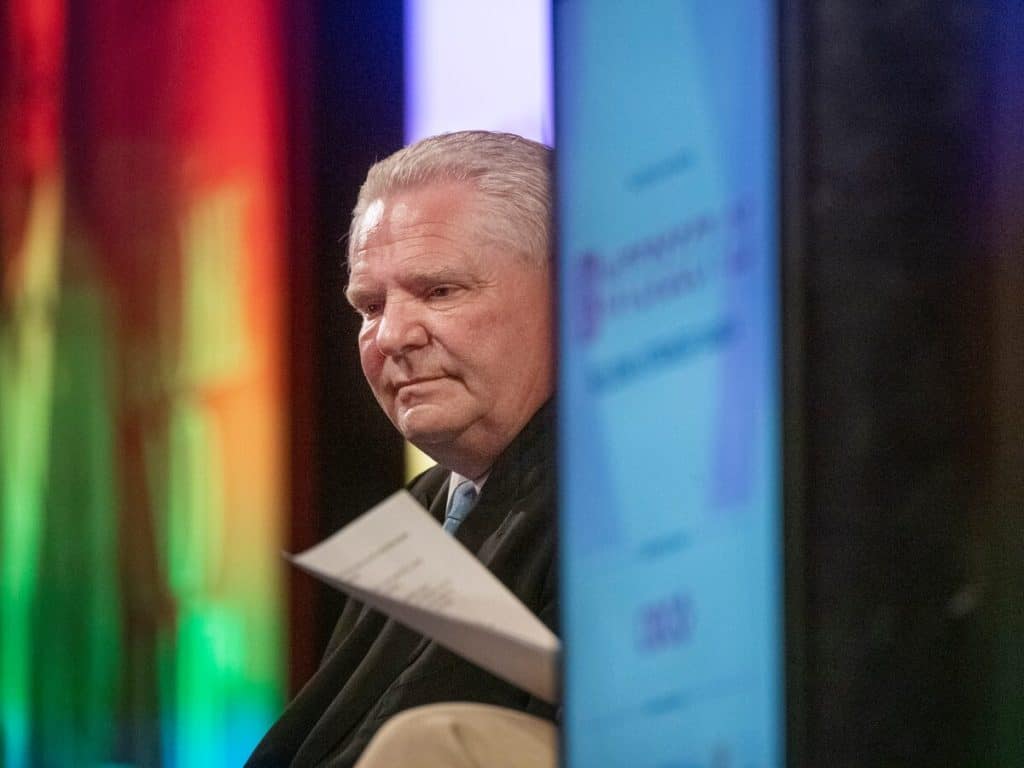
Upon taking office, Doug Ford’s government swiftly implemented a series of policy changes designed to reflect its conservative mandate. A prominent early action was the cancellation of the cap-and-trade carbon pricing system, fulfilling a key campaign promise and aligning with conservative skepticism of broad carbon taxes as ineffective and economically burdensome. His government also moved to liberalize liquor laws, allowing for greater access to alcohol sales in convenience stores and grocery stores, which was framed as increasing consumer convenience and supporting private enterprise. Other significant changes included freezing the minimum wage increase, pausing the implementation of a modernized sex-education curriculum, and undertaking comprehensive reviews of various government agencies to identify efficiencies. For conservatives, these initial policy shifts were seen as a clear demonstration of his commitment to limited government, fiscal responsibility, and a willingness to quickly roll back policies perceived as stifling economic activity or infringing on individual choice.
Handling of the COVID-19 Pandemic
Doug Ford’s leadership during the unprecedented challenges of the COVID-19 pandemic presented a unique test for his government and garnered varied conservative assessments. Initially, his government’s approach was perceived by many as cautious, often balancing public health restrictions with concerns for the economic impact on businesses and workers. Conservatives generally appreciated his focus on economic recovery and ensuring businesses could operate where safely possible, aligning with principles of free enterprise and individual economic liberty. However, the pandemic also necessitated significant government spending and intervention, which for some fiscal conservatives might have been a point of discomfort, though understood as a necessary response to a crisis. His reliance on business leaders for advice and his emphasis on vaccine distribution and supply chain stability were generally well-received. The pandemic underscored the tension between the conservative desire for limited government and the practical demands of crisis management and maintaining social order in a public health emergency.
Infrastructure Investment and Economic Development
A consistent focus of Doug Ford’s government has been on large-scale infrastructure investment, particularly in transit, roads, and healthcare facilities. While conservatives typically advocate for reduced government spending, investments in critical infrastructure are often seen as a legitimate role for government that directly facilitates economic growth and enhances a province’s competitiveness. Ford’s emphasis on building subways, highways, and hospitals is viewed by conservatives as a practical investment in the province’s future, enabling businesses to transport goods more efficiently and citizens to commute more easily, thereby boosting productivity. His government often frames these projects as essential for attracting and retaining businesses and creating jobs, aligning with the conservative goal of fostering a vibrant economy. This pragmatic approach to spending on projects that deliver tangible economic benefits is generally supported by conservatives.
Relations with the Federal Government and Other Provinces
Doug Ford’s approach to intergovernmental relations has been characterized by a willingness to challenge the federal government, particularly on issues of carbon pricing and federal funding, while also seeking common ground with other provincial premiers. For many Ontario conservatives, his assertive stance against the federal carbon tax and his advocacy for provincial autonomy aligned with a conservative suspicion of centralized federal power and a desire to protect provincial jurisdiction and economic interests. His efforts to build alliances with other premiers, particularly those in Western Canada, on issues like energy policy and fiscal transfers, resonated with a conservative emphasis on provincial rights and a more decentralized federation. This posture is seen as advocating for Ontario’s distinct interests within the broader Canadian context, consistent with a conservative understanding of national sovereignty as it pertains to federal-provincial relations.
Conservative Thought on Doug Ford vs. Other Political Figures (Ontario/Canadian Context)
The conservative assessment of Doug Ford is often made in contrast to other prominent figures in Ontario and Canadian politics, highlighting his distinct style and policy priorities.
Compared to his immediate Liberal predecessor, Kathleen Wynne, Ford represented a clear and stark philosophical and policy reversal. Conservatives widely viewed Wynne’s government as characterized by high spending, increased taxes, and extensive government intervention in the economy. Ford’s platform and early actions were seen as a direct repudiation of this approach, embodying the conservative commitment to fiscal responsibility and limited government. The contrast highlighted differing visions for the role of government in society.
When compared to Mike Harris, a Progressive Conservative premier from the 1990s known for his “Common Sense Revolution,” Ford shares a similar populist appeal and a commitment to tax cuts and spending restraint. Many conservatives see Ford as carrying forward the Harris legacy of fiscal conservatism and reducing the size of government. However, some might distinguish Ford’s approach as being perhaps less ideologically doctrinaire than Harris’s, with a more pronounced emphasis on pragmatism and immediate deliverables.In relation to federal Conservative leaders like Andrew Scheer or Pierre Poilievre, Ford’s style often stands out. While sharing core conservative principles on economics, Ford’s populist, “for the people” communication style is often seen as more direct and less formal. This can be viewed as an asset by conservatives who prioritize electability and broad public appeal, while others might prefer a more traditionally refined or intellectual approach to leadership. Ford’s success in appealing to blue-collar voters and in rural and suburban areas is a key aspect of his conservative appeal, demonstrating a capacity to win power and implement conservative policies.
Conclusion
In conclusion, from a conservative perspective, Doug Ford’s leadership as Premier of Ontario is largely characterized by a pragmatic and populist approach to governance, firmly rooted in core conservative principles. His emphasis on fiscal responsibility, reducing bureaucratic red tape, and fostering economic growth through private enterprise has resonated strongly with Ontario conservatives. While his style is distinct and sometimes less overtly ideological, his supporters value his commitment to delivering tangible results for the province, making him a significant figure in contemporary Canadian conservatism and a leader who embodies a results-oriented application of conservative economic and governance principles.
You've read articles over the past year
Will you support conservative education?
A gift of any amount helps keep unique explanatory journalism free for all, and
supports our mission to help everyone understand the world, regardless of their
ability to pay.One-time contributors join our community of givers and will be kept
up to date on the journalism that you help keep free.

Milton Friedman
Milton Friedman (1912–2006) was the most consequential economist of the American right in the twentieth century. He rebuilt the case for free markets at a...

Margaret Thatcher
Margaret Thatcher was Prime Minister of the United Kingdom from 4 May 1979 to 28 November 1990, the longest continuous premiership of the twentieth century...

Karl Marx
Karl Marx (1818–1883) was the German philosopher and economist whose theory of class struggle became the most consequential political doctrine of the modern age. With...

Thomas Aquinas
Thomas Aquinas was a thirteenth-century Italian Dominican friar, theologian, and philosopher whose synthesis of Aristotelian philosophy and Christian doctrine became the most influential intellectual framework...