
Print
Cite
Feedback
Share
Key Takeaways
- Isolationism is a doctrine which prioritizes the nation’s domestic interests while minimizing engagement in global affairs.
- Conservatives are divided on how isolationist to be. Some conservatives think that foreign interests should be addressed while others think that countries should focus domestically.
Introduction
Isolationism is a foreign policy doctrine characterized by a nation’s deliberate avoidance of entanglement in international affairs and its commitment to maintaining a policy of non-intervention in the conflicts of other nations. Isolationism calls for nations to focus on domestic interests and avoiding extensive political, economic, or military entanglements with other countries.

This doctrine is founded on the belief that a nation’s primary focus should be the preservation of its own sovereignty, security, and interests, often at the expense of active participation in global diplomatic, economic, and military affairs. Isolationism has been employed by various nations throughout history as a means of safeguarding their autonomy and minimizing external influences.[1]
A notable example of a nation adopting isolationism is modern day North Korea (or Hermit Kingdom), the United States was also considered isolationist during 1930’s, which was abandoned in 1941 due to the attacks on Pearl Harbor.
Conservative Perspective
Conservatives are divided on their isolationist tendencies. Some conservatives argue that nations should police foreign wars, arguing that there is a moral duty to help others. Other conservatives argue that governments should be hyper-focused on attending to domestic needs. Like many issues, there are a variety of perspectives across the spectrum of isolationist to interventionist.
Isolationist Conservatives
Conservatives who are isolationist often argue that foreign intervention is expensive, that it infringes on other, sovereign nations, and that it distracts from domestic focuses. Isolationism is a key trait of paleo-conservatism.
Cost of Foreign Intervention
Isolationist conservatives assert that foreign interventions are expensive, requiring significant financial resources, adding that the financial burden of prolonged foreign interventions can contribute to the national debt. Additional arguments are made that reducing overseas military commitments would ease the financial burden on the country’s economy and make additional resources available for domestic needs. An example of this is how the intervention in Afghanistan and Iraq has cost the government billions of taxpayer dollars, which could have been used to cover domestic needs.
Respect for Sovereignty
Isolationist conservatives emphasize the principle of non-interference in the affairs of sovereign nations, contending that foreign interventions, even with good intentions, can be seen as infringing on the autonomy of other countries, leading to diplomatic tensions and potential conflicts. Additionally, arguments are made that respecting the sovereignty of other nations fosters a more stable and peaceful international order.[2]
Focus on Domestic Priorities
Isolationist conservatives contend that too much focus on foreign affairs can divert attention and resources away from pressing domestic issues, arguing for concentrating efforts on addressing internal challenges, promoting economic growth, and strengthening national cohesion. Moreover, the belief is that excessive involvement in foreign conflicts can contribute to social and political divisions at home, which could threaten social harmony.[3]
Interventionist Conservatives
Interventionist leaning conservatives, often associated with neo-conservatism, argue that there is a moral duty to help in times of war. Even though war is expensive, sacrifice is required in order to rid the world of evil and by doing so, countries can establish alliances with those they help, further strengthening a country’s own defense and trading abilities.
Moral Duty and responsibility to protect
Interventionist conservatives may advocate for the Responsibility to Protect (R2P) doctrine, asserting that the international community has a responsibility to intervene when a government fails to protect its citizens from gross human rights abuses, in addition to a moral duty to intervene in times of war to combat evil and protect human rights. An example of this is the NATO intervention in former Yugoslavia to protect the Albanians from being ethnically cleansed in 1999.[4]
Sacrifice for the greater good
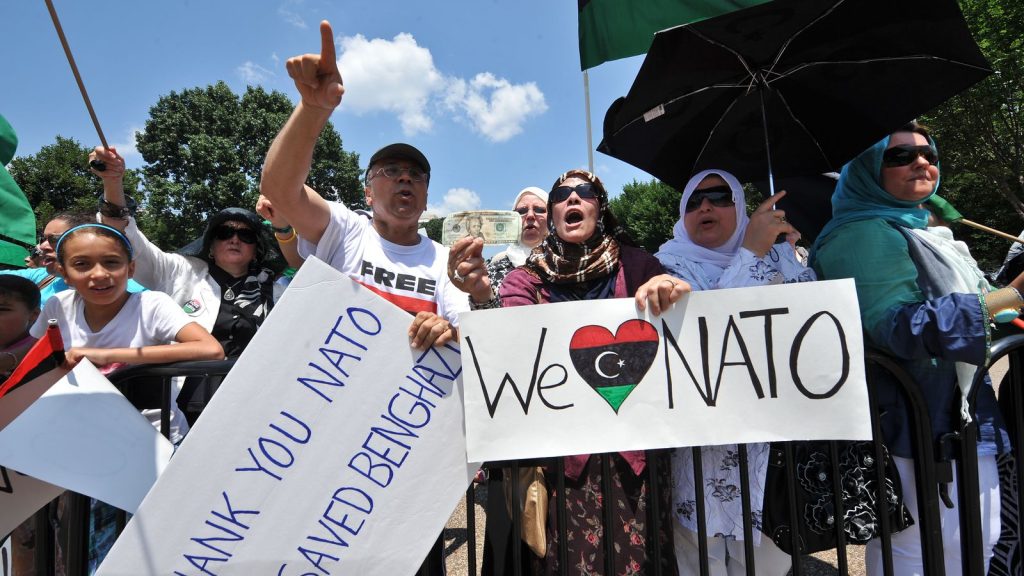
While acknowledging the financial costs of war, interventionist conservatives assert that the sacrifice is necessary to achieve greater global stability and security. Arguments are made that certain conflicts require intervention to prevent the spread of tyranny and maintain international order. Additionally, interventionists argue that the short-term sacrifices made during conflicts can lead to long-term benefits, such as the establishment of democracies and the promotion of freedom, which contribute to a more secure and prosperous world.
Building alliances
Interventionist conservatives assert that providing aid and military assistance to countries in need strengthens alliances, arguing that by helping nations in times of crisis, a country can build strategic partnerships and coalitions that enhance its own security and geopolitical influence. Moreover, arguments are made that intervening in conflicts can lead to the establishment of strong economic and trade relationships with the countries they assist, promoting mutual benefits and contributing to global economic stability.[5]
- [1] Braumoeller, Bear F. 2010. “The Myth of American Isolationism.” Foreign Policy Analysis 6 (4): 349–71. doi: https://doi.org/10.1111/j.1743-8594.2010.00117.x.
- [2] Schadlow, Nadia. 2022. “Conservative U.S. Statecraft for the 21st Century.” Foreign Policy. November 7. https://foreignpolicy.com/2022/11/07/us-republicans-conservative-foreign-policy-principles/.
- [3] Urbatsch, R. 2010. “Isolationism and Domestic Politics.” Journal of Conflict Resolution 54 (3): 471–92. doi: https://doi.org/10.1177/0022002709357891.
- [4] Beech, M., and T. J. Oliver. 2013. “Humanitarian Intervention and Foreign Policy in the Conservative-Led Coalition.” Parliamentary Affairs 67 (1): 102–18. doi: https://doi.org/10.1093/pa/gst024.
- [5] Tucker, Robert W. 1985. “Isolation & Intervention.” The National Interest, no. 1: 16–25. https://www.jstor.org/stable/42894372.
You've read articles over the past year
Will you support conservative education?
A gift of any amount helps keep unique explanatory journalism free for all, and
supports our mission to help everyone understand the world, regardless of their
ability to pay.One-time contributors join our community of givers and will be kept
up to date on the journalism that you help keep free.

Zionism
Zionism is a movement that advocates for the establishment of a Jewish state in the historic land of Israel. Conservatives generally have positive...

Universal Declaration of Human Rights
The Universal Declaration of Human Rights is an international document which declares the rights of all humans. Conservatives support most of the fundamental...

Isolationism
Isolationism is a foreign policy doctrine which prioritizes the nation's domestic interests while minimizing engagement in global affairs. Conservatives generally support isolationism, viewing...

Foreign Intervention
Isolationism is a doctrine which prioritizes the nation's domestic interests while minimizing engagement in global affairs. Conservatives are divided on how isolationist to...