
Print
Cite
Feedback
Share
Key Takeaways
- Zionism is a movement that advocates for the establishment of a Jewish state in the historic land of Israel.
- Conservatives generally have positive views of Zionism, expressing support for Israel’s right to exist, as well as viewing it as a stabilizing force in the war-prone Middle East.
- Conservatives advocate for a peaceful resolution to the Israeli-Arab conflict, supporting efforts such as the “Abraham Accords.”
Introduction
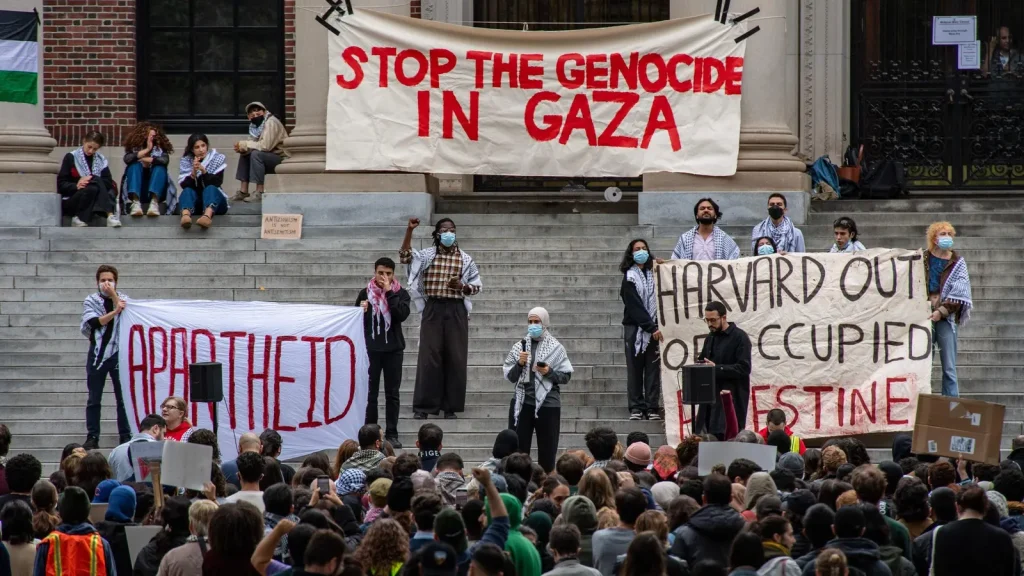
Zionism is a political and cultural movement that emerged in the late 19th century, advocating for the establishment of a Jewish homeland in the historic land of Israel. Rooted in both nationalist and religious sentiments, zionism gained prominence as a response to the socio-political challenges faced by Jewish communities in Europe. The movement sought to address issues such as anti-semitism, discrimination, and the quest for a collective Jewish identity.[1]
Theodor Herzl is considered the father of Zionism and articulated its principles in his influential work “The Jewish State” (1896). Herzl envisioned the creation of a sovereign Jewish state as a solution to the “Jewish Question”, which were discussions surrounding the integration, status, and treatment of Jews in European societies and led to many pogroms against Jews across Europe.
The First Zionist Congress in 1897 marked the formal establishment of the Zionist Organization, aiming to promote Jewish settlement in Palestine and the realization of Jewish national aspirations. The movement gained momentum throughout the 20th century, leading to the establishment of the State of Israel in 1948.
Conservative Perspective
There are three main considerations when it comes to the conservative view on Zionism: Israel’s right to exist, security considerations in the Middle East, the Israeli-Arab conflict.
Support for Israel’s Right to Exist
Conservatives express strong support for Israel’s right to exist as a sovereign nation-state, viewing Israel as a key ally in a tumultuous region and appreciate its commitment to democratic principles and rule of law. Moreover, conservatives recognize the historical and cultural ties of the Jewish people to the land of Israel, viewing the establishment of Israel in 1948 as a legitimate fulfillment of historical and biblical promises. An example of this support could be seen when the United States, under President Donald Trump, was the first country to move its embassy to Jerusalem in 2017, recognizing it as the capital of Israel.[2]
Security Concerns in the Middle East
Conservatives highlight the strategic importance of Israel as a stable and key ally in a region marked by geopolitical challenges, particularly in the context of regional conflicts and security threats. Conservatives advocate for policies that strengthen the U.S.-Israel relationship to address shared security concerns, in addition to Israel’s actions in response to security challenges, including military interventions when deemed necessary.
The Israeli-Arab Conflict
Conservatives support Israel in its conflict with the neighboring Arab countries, arguing for its right to exist and live peacefully. Conservative also express support for peace efforts in the region, such as the “Abraham accords” (2020), which are a series of agreements to normalize relations between many Arab countries and Israel. The process started under President Trump and still continues under President Biden.
Moreover, conservatives generally express skepticism toward Palestinian leadership, be it in the West Bank or in Gaza, particularly concerning their commitment to peace and recognition of Israel’s right to exist as a Jewish state. Conservatives cite instances of various Palestinian armed groups’ terrorist activities, incitement of violence against Israelis (and sometimes against Jews), and rejectionism as significant obstacles to achieving a lasting peace agreement.[3]
Differing Conservative Perspectives
Libertarians criticize the financial and military support provided to Israel by the United States, arguing that it goes against principles of fiscal responsibility and a prioritization of domestic issues. Additionally, libertarians question the morality and effectiveness of U.S. involvement in conflicts in the Middle East, including those involving Israel, prioritizing non-interventionism (not only in this conflict, but all world conflicts that don’t concern the US).[4]
Moreover, some conservatives express concerns about the influence of pro-Israel lobbying groups on U.S. foreign policy. Their argument is that it interferes with US policy making and entangles the nation in conflicts that do not directly concern it, in addition to undermining its sovereignty.
Some conservative Muslims express criticism of specific Israeli government policies, particularly those related to the Israeli-Palestinian conflict. These conservatives advocate for a peaceful resolution to the conflict, support for Palestinian rights, and opposition to Israeli government. Conservative Muslims also express concerns about the treatment of Muslim minorities in Israel, such as restrictions on religious practices and access to holy sites in Jerusalem.
- [1] Stanislawski, Michael. 2016. “Theodor Herzl and the Creation of the Zionist Movement, 1897–1917.” Zionism: A Very Short Introduction, December, 22–34. doi:https://doi.org/10.1093/actrade/9780199766048.003.0003
- [2] ii Kurtzleben, Danielle . 2023. “This Is How the Republican Party Became so Strongly Pro-Israel.” NPR. October 19. https://www.npr.org/2023/10/19/1206481356/republicans-israel-gop-middle-east-evangelicals-end-times-rapture-christians
- [3] Gries, Peter Hays. 2015. “How Ideology Divides American Liberals and Conservatives over Israel.” Political Science Quarterly 130 (1): 51–78. doi:https://doi.org/10.1002/polq.12288
- [4] “Chaos in Gaza.” 2009. Libertarian Party. January 5. https://www.lp.org/blogs-anonymous-chaos-in-gaza/#:~:text=It
You've read articles over the past year
Will you support conservative education?
A gift of any amount helps keep unique explanatory journalism free for all, and
supports our mission to help everyone understand the world, regardless of their
ability to pay.One-time contributors join our community of givers and will be kept
up to date on the journalism that you help keep free.

Woman’s Rights
Woman's rights denotes the body of legal and political claims asserting equal standing for women in property, contract, suffrage, education, employment, and family law. In...

White Privilege
White privilege is the claim that people classified as white receive unearned advantages in societies with a history of racial hierarchy, and that these advantages...

Torture
Torture is the deliberate infliction of severe pain on a person held in custody, for confession, information, punishment, or intimidation. European law abolished it as...

Social Security
Social Security is the United States' federal old-age, survivors, and disability insurance program, financed by a dedicated payroll tax and administered by the Social Security...