
Print
Cite
Feedback
Share
Woman’s rights denotes the body of legal and political claims asserting equal standing for women in property, contract, suffrage, education, employment, and family law. In the Anglo-American world the sequence ran from married women’s property acts in the 1830s through the suffrage victories of 1918 to 1928 in Britain and 1920 in the United States, to equal-pay and anti-discrimination statutes in the 1960s and 1970s. Conservatives supported and in several cases led these reforms, on the ground that the common-law doctrine of coverture — which merged a wife’s legal personality into her husband’s — was an inherited defect rather than an inherited good.1
The conservative quarrel is not with equality before the law but with the movement’s later turn: the claim that the family is itself the mechanism of subordination, and that the state should therefore displace its functions. Burke’s test applies. A tradition that cannot justify itself to the people living inside it will not survive, but the remedy for a defective institution is repair, not demolition.
Key Takeaways
- Mary Wollstonecraft’s A Vindication of the Rights of Woman (1792) argued for female education on the ground that reason has no sex.1
- The Married Women’s Property Act 1882 gave English wives independent title to their own property and earnings.
- The Representation of the People Act 1918 enfranchised British women over 30; the 1928 Act equalised the age at 21.
- New Zealand extended the parliamentary franchise to women in 1893, ahead of any other self-governing nation.
- Baldwin’s Conservative government carried the 1928 equal franchise; the property acts of 1870 and 1882 passed under Gladstone’s Liberals.
History And Context
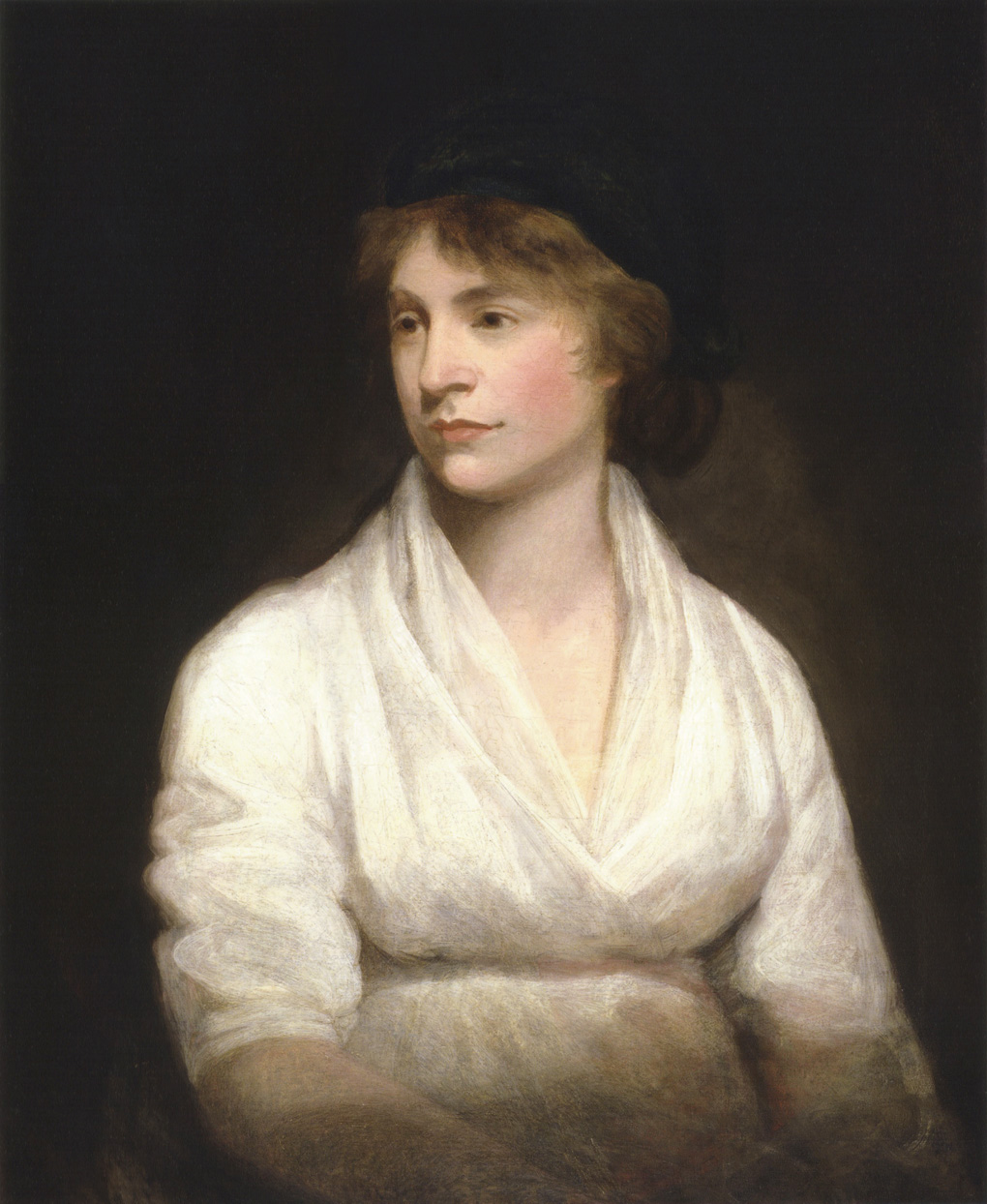
Under English common law as codified by Blackstone in 1765, a married woman had no separate legal existence: she could not sue, contract, or hold property in her own name. This was not an ancient universal. Roman law, Anglo-Saxon custom, and the Scottish tradition each granted married women capacities that coverture withdrew.2
Wollstonecraft’s 1792 argument was directed at Rousseau’s account of female education in Émile. She held that women appeared frivolous because they were trained to be so, and that a rational creature denied reasoning is corrupted rather than protected.1 Her book was read as radical in 1792 and as common sense by 1892.
The nineteenth-century reforms proceeded piecemeal and by statute. The Custody of Infants Act 1839 followed Caroline Norton’s campaign. The Matrimonial Causes Act 1857 opened divorce to the civil courts. The Married Women’s Property Acts of 1870 and 1882 dismantled coverture in England. In the United States, New York’s 1848 statute preceded the Seneca Falls Convention of the same year, where Elizabeth Cady Stanton’s Declaration of Sentiments set out the case for the franchise.
Suffrage came unevenly: New Zealand in 1893, Australia federally in 1902, Finland in 1906, Canada federally in 1918, Britain in 1918 and 1928, the United States by the Nineteenth Amendment in 1920, France in 1944, Switzerland federally in 1971. The pattern shows no single ideological driver; both Liberal and Conservative administrations carried the measures where they passed.
Post-war statutes addressed employment: Britain’s Equal Pay Act 1970 and Sex Discrimination Act 1975, the American Equal Pay Act of 1963 and Title VII of the Civil Rights Act 1964, and section 15 of Canada’s Charter, enacted in 1982 and in force from 1985.
The Conservative Position
Conservatives ground the case for women’s legal equality in the same principle they use against arbitrary power in general: a person’s standing before the law should not depend on a status she did not choose and cannot alter. Coverture failed that test. Its abolition was a correction internal to the common law, argued in the language of property and contract that the common law already spoke.
On the franchise, the conservative argument was that women held property, paid rates, ran businesses, and were subject to the criminal law. Representation without exception followed from taxation and obligation. Millicent Fawcett made this case in constitutional rather than revolutionary terms across five decades, and it was this version, not the militant one, that carried Parliament.3
Where conservatives part company with the contemporary movement is on the family. The claim that marriage and motherhood are instruments of oppression treats a relationship most women enter voluntarily as false consciousness. Conservatives answer that the household is the primary school of obligation, that children have interests distinct from their parents’ preferences, and that no state programme has matched what stable families produce at their own expense.
Conservatives also question the policy inference drawn from the aggregate pay gap. Once hours, continuous years in post, occupational choice, and firm are controlled, the residual narrows to a few percentage points in most developed economies. Claudia Goldin’s work traces the remaining gap principally to the earnings penalty attached to flexible hours in certain professions rather than to employer discrimination.4 That diagnosis points to different remedies — job design, childcare cost, tax treatment of second earners — than a mandate to equalise reported averages.
Finally, conservatives note that quota policies purchase visible representation at the cost of the merit principle, and that the women appointed under them carry a suspicion of tokenism they did not earn.
Differing Positions
Feminist critics argue that the conservative account mistakes the sequence. Legal equality was granted, on this view, only after sustained pressure from women outside the constitutional process — the Pankhursts’ Women’s Social and Political Union, the American picketers arrested outside the White House in 1917. Crediting the parliamentarians while ignoring the militants rewrites the record.
A second argument holds that formal equality is insufficient where informal structures persist. Identical statutes produce different outcomes when unpaid domestic labour falls disproportionately on one sex. Measures such as paid parental leave reserved for fathers, adopted in Iceland and Sweden, are defended as ways to make legal equality operative rather than nominal.
A third position disputes the conservative reading of the family altogether, arguing that the household division of labour is a historically contingent arrangement rather than a natural one, and that treating it as given forecloses the question.
References
- Mary Wollstonecraft, A Vindication of the Rights of Woman (Joseph Johnson, 1792).
- William Blackstone, Commentaries on the Laws of England, vol. 1 (Clarendon Press, 1765), bk. 1, ch. 15.
- Millicent Garrett Fawcett, The Women’s Victory — and After: Personal Reminiscences, 1911–1918 (Sidgwick & Jackson, 1920).
- Claudia Goldin, Career and Family: Women’s Century-Long Journey toward Equity (Princeton University Press, 2021).
You've read articles over the past year
Will you support conservative education?
A gift of any amount helps keep unique explanatory journalism free for all, and
supports our mission to help everyone understand the world, regardless of their
ability to pay.One-time contributors join our community of givers and will be kept
up to date on the journalism that you help keep free.
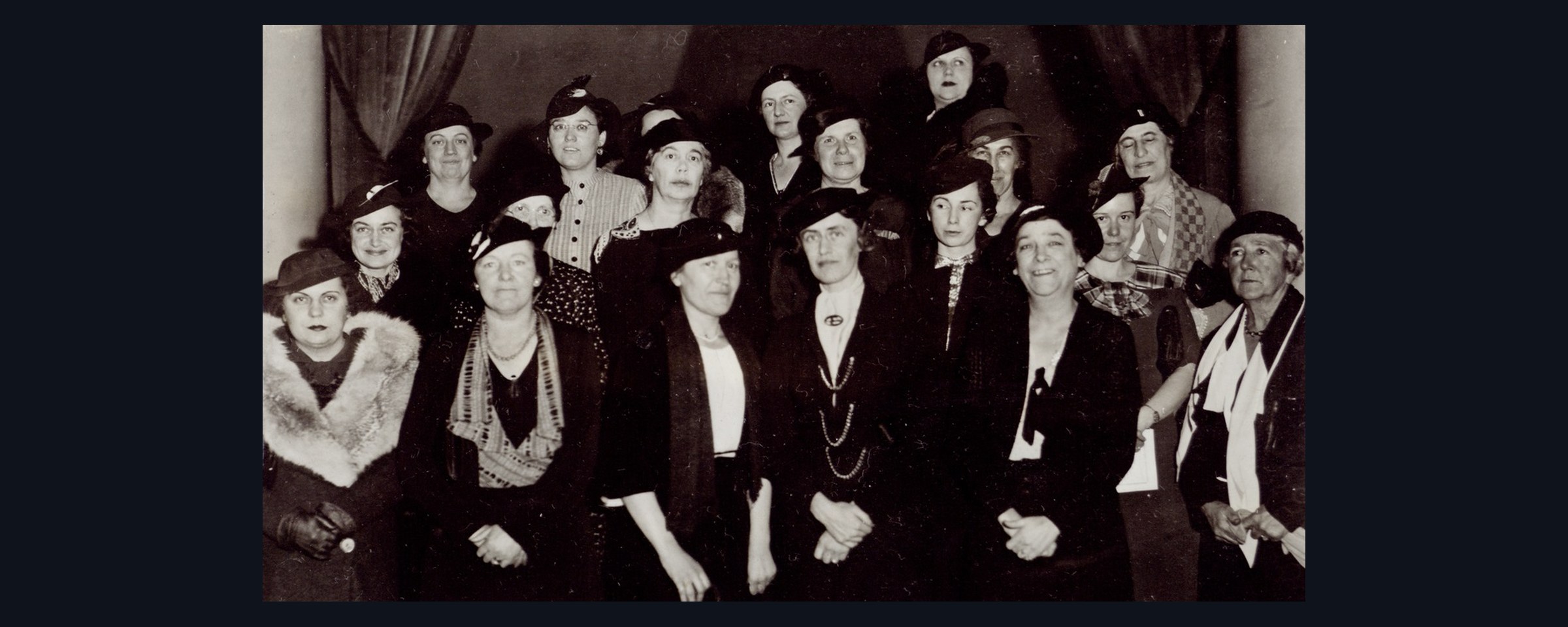
Woman’s Rights
Woman's rights denotes the body of legal and political claims asserting equal standing for women in property, contract, suffrage, education, employment, and family law. In...

White Privilege
White privilege is the claim that people classified as white receive unearned advantages in societies with a history of racial hierarchy, and that these advantages...

Torture
Torture is the deliberate infliction of severe pain on a person held in custody, for confession, information, punishment, or intimidation. European law abolished it as...

Social Security
Social Security is the United States' federal old-age, survivors, and disability insurance program, financed by a dedicated payroll tax and administered by the Social Security...