
Print
Cite
Feedback
Share
Jean Charest is a prominent Canadian politician whose career has spanned both federal and provincial politics, including serving as the leader of the Progressive Conservative Party of Canada and later as the Premier of Quebec, leading the Quebec Liberal Party. From a conservative perspective, assessing Jean Charest presents a complex, often nuanced picture. While his federal background as a Progressive Conservative aligned him with core conservative principles, his long tenure as a provincial Liberal premier in Quebec involved navigating a distinct political landscape that sometimes necessitated pragmatic policy choices which might be viewed differently by various conservative factions. Nevertheless, his approach to fiscal management, federalism, and the preservation of social order would often be the lenses through which conservatives evaluate his legacy.
Overview

For many conservatives across Canada, Jean Charest’s political journey embodies a fascinating blend of traditional conservative ideals and pragmatic governance, particularly within the unique context of Quebec. His early career as a federal Progressive Conservative leader positioned him as a proponent of national unity, fiscal prudence, and a more moderate brand of conservatism. This phase of his career would generally be viewed positively by pan-Canadian conservatives who prioritize a strong, united federal state.
However, his shift to provincial politics, taking the helm of the Quebec Liberal Party (a historically federalist, but ideologically broad, provincial party not directly affiliated with the federal Liberal Party), complicated a purely “conservative” assessment. As Premier of Quebec from 2003 to 2012, Charest’s government pursued policies that, at times, aligned with fiscal conservative principles, such as efforts to reduce the provincial debt, control spending, and promote economic development through market-oriented approaches. These actions would resonate with fiscal conservatives who emphasize fiscal responsibility and efficient governance.
Yet, his premiership also involved navigating Quebec’s distinct social and political landscape, including balancing French language protection, promoting Quebec’s interests within the federation, and managing public services. This pragmatic approach, while necessary for governing Quebec, might at times have led to policies or compromises that more ideologically rigid conservatives might view with skepticism, particularly concerning the extent of government intervention or social programming. Conservatives typically prefer limited government intervention and a strong emphasis on individual liberty. Nevertheless, his consistent advocacy for Canadian federalism and his firm stance against Quebec sovereignty throughout his career were widely applauded by conservatives across Canada, who deeply value national unity and the existing constitutional order. His leadership style, often characterized by a strong work ethic and a focus on incremental change rather than radical transformation, could also be seen as embodying conservative prudence in governance.
Core Elements of Conservative Engagement with Jean Charest
Fiscal Management in Quebec
A significant area where Jean Charest’s premiership often drew approval from conservatives was his approach to fiscal management in Quebec. Conservatives generally prioritize fiscal responsibility, emphasizing the prudent stewardship of public funds, controlling government spending, and reducing public debt to ensure long-term economic stability and intergenerational equity. During his time as Premier, Charest’s government made efforts to restrain provincial spending, implement various economic reforms aimed at boosting the economy, and sought to balance the budget. While the extent of his success in these areas might be debated, the intent behind these policies—to make Quebec’s economy more competitive and fiscally sound—aligned strongly with conservative economic principles. For fiscal conservatives, these efforts represented a pragmatic application of their core beliefs in a challenging provincial context.
Federalism and National Unity
Jean Charest’s unwavering commitment to Canadian federalism and his strong opposition to Quebec sovereignty were arguably the most lauded aspects of his career from a pan-Canadian conservative perspective. Conservatives generally place a high value on national unity and the maintenance of the existing constitutional order. Charest, having led the federal Progressive Conservative Party and served as a prominent federalist voice, consistently championed a united Canada, particularly during periods of renewed debate over Quebec’s place in the federation. His role in winning the 1995 Quebec referendum for the federalist side, and his subsequent leadership in Quebec firmly against sovereignty, resonated deeply with conservatives across the country who view Canadian unity as paramount. His stance was seen as embodying the conservative principle of preserving established institutions and the social order against disruptive, even revolutionary, change.
Pragmatism versus Ideological Purity
Jean Charest’s political career, particularly his transition from federal Progressive Conservative leader to provincial Quebec Liberal premier, highlights a recurring tension within conservatism between pragmatism and ideological purity. Conservatives often value a realistic approach to governance, recognizing the need for practical solutions and incremental change rather than rigid adherence to abstract ideals. Charest’s ability to adapt his approach to the unique political and cultural dynamics of Quebec, often making politically expedient decisions, could be seen as pragmatic by some conservatives. However, others, particularly more ideologically driven or social conservatives, might view such adaptations as a compromise of core principles, especially concerning the role of the state in the economy or certain social issues. This internal conservative debate reflects different priorities: some value the ability to win and govern effectively, while others prioritize strict adherence to a comprehensive ideological framework.
Leadership and Governance
Andrew Scheer‘s leadership style and approach to governance also garnered significant attention from conservatives. Conservatives generally value strong, decisive leadership that prioritizes social order and effective administration. Scheer’s personal discipline, work ethic, and his reputation for being a diligent politician were often seen as positive attributes. His leadership was assessed on his ability to unite the diverse factions within the Conservative Party of Canada, to articulate a coherent and compelling vision for the country, and to effectively hold the governing party accountable. While his tenure saw the Conservatives gain seats in the 2019 federal election and win the popular vote, the failure to form government led to questions within conservative circles about his overall electability and his strategic effectiveness in appealing to a broader electorate beyond the party’s base. This led to a period of internal party reflection on how best to achieve electoral success while remaining true to conservative principles.
Role in the Conservative Movement
Jean Charest’s enduring legacy within the broader Canadian conservative movement is complex and multi-layered. He is remembered by many federal conservatives as the last leader of the Progressive Conservative Party of Canada, a party with a long and storied history that ultimately merged with the Canadian Alliance to form the modern Conservative Party of Canada. His efforts to hold the “PC” brand together in challenging times are often acknowledged. While his subsequent leadership of the Quebec Liberal Party might initially appear to distance him from federal conservatism, his consistent pro-federalist stance and his occasional fiscally conservative policy choices as Premier meant he remained a figure of interest, and sometimes a source of shared values, for various conservative factions across Canada. His career illustrates the fluidity and evolution of political labels and alliances within the Canadian context, where principles often transcend party lines.
Conservative Perspectives on Specific Aspects of Charest’s Tenure/Platform
Economic Record as Premier: Balancing Austerity and Investment
Jean Charest’s economic record as Premier of Quebec was a key focus for conservative analysis. His government inherited significant provincial debt and faced ongoing fiscal challenges. Conservatives would generally commend efforts made to control public spending, reduce the size of the provincial bureaucracy, and pursue policies aimed at making Quebec more economically competitive. Specific measures, such as the gradual elimination of the health services fund contribution for individuals and efforts to attract foreign investment, would be viewed positively. However, some conservatives might critique his government for not moving far enough or fast enough on certain market reforms, or for continuing to oversee high levels of provincial taxation and a significant role for the state in the economy compared to more hardline fiscal conservative ideals. The balancing act between addressing the province’s debt and continuing to fund social programs was a consistent feature, which would be assessed differently by various conservative priorities.
Stance on Quebec Sovereignty and Nationalist Debates
Charest’s consistent and unwavering federalist stance was perhaps his most defining characteristic from a pan-Canadian conservative viewpoint. His leadership of the Quebec Liberal Party meant he was at the forefront of the debate against Quebec sovereignty and for a strong place for Quebec within Canada. This resolute defense of national unity and the existing constitutional framework resonated powerfully with conservatives across the country, who prioritize the preservation of the nation-state and the maintenance of political stability. His rhetoric and actions in opposing another referendum on sovereignty would be seen as a direct application of conservative principles of preserving established order against secessionist pressures. This commitment to federalism often overshadowed other policy differences in the eyes of many national conservatives.
Relationship with the Federal Government
Jean Charest’s relationship with the federal government during his time as Quebec Premier would be of interest to conservatives, particularly those focused on federal-provincial dynamics. His interactions with successive federal governments, including those led by Liberals and Conservatives, would be assessed based on how effectively he navigated Quebec’s demands within the federal system while upholding national unity. Conservatives generally support strong, effective governance at all levels and would observe how Charest managed intergovernmental relations—whether he fostered cooperation or contributed to inter-provincial friction. His ability to secure funding or negotiate agreements favorable to Quebec, while operating within the federal framework, would be viewed through a pragmatic lens, weighing provincial interests against broader national cohesion.
Conservative Thought on Jean Charest vs. Other Canadian Political Figures
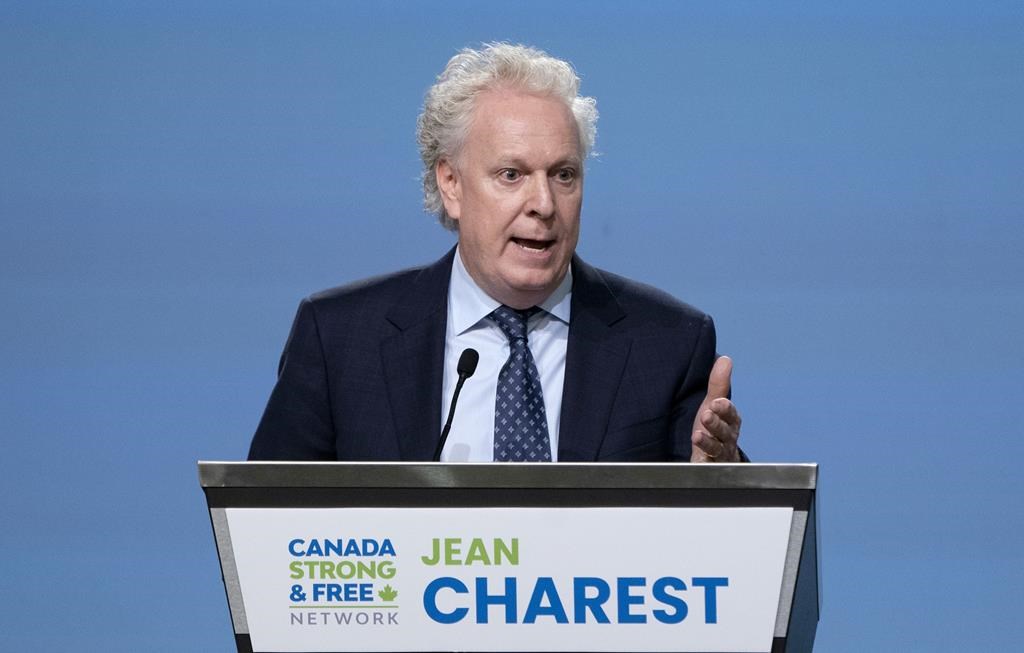
When considering Jean Charest’s place within Canadian political thought, conservatives draw comparisons and contrasts with other prominent figures.
Compared to Stephen Harper, who unified the federal conservative movement and led a more ideologically defined Conservative government, Charest represents an earlier, more moderate “Progressive Conservative” tradition. While both shared commitments to fiscal prudence and a strong federal Canada, Harper’s emphasis on accountability and a more assertive, less compromising brand of conservatism might be contrasted with Charest’s more consensus-oriented and pragmatic provincial leadership. Some conservatives might see Charest as too willing to compromise conservative principles for political expediency, while others might view his flexibility as a necessary quality for governance in Quebec.
Contrasting him with Quebec sovereigntist leaders like Jacques Parizeau or Lucien Bouchard, Charest is lauded by conservatives for his steadfast federalism. His unwavering commitment to a united Canada provided a crucial counterpoint to the separatist movement, aligning with conservative values of national unity and the preservation of established political order. Against federal Liberal leaders like Justin Trudeau, Charest might be seen by conservatives as sharing a more centrist, economically liberal, but fiscally cautious approach, especially compared to the more expansive spending policies of modern federal Liberals. While Charest led the provincial Liberal Party, his fiscal and federalist inclinations often placed him closer to the economic mainstream favored by many federal conservatives than the more progressive social and economic agendas of the federal Liberal Party. His emphasis on balancing budgets, for example, would be a point of commonality.
Conclusion
In conclusion, the conservative perspective on Jean Charest is a nuanced one, reflecting his unique political trajectory across federal and provincial spheres in Canada. While his later leadership of the Quebec Liberal Party placed him outside the federal Conservative movement, his strong commitment to Canadian federalism and his often fiscally prudent approach to governance resonated deeply with core conservative principles. Conservatives generally appreciated his unwavering defense of national unity against the threat of Quebec sovereignty and recognized his efforts to manage public finances responsibly. His career exemplifies a pragmatic brand of conservatism that prioritizes stability, economic competence, and national cohesion, even when operating within a diverse and ideologically complex political landscape.
You've read articles over the past year
Will you support conservative education?
A gift of any amount helps keep unique explanatory journalism free for all, and
supports our mission to help everyone understand the world, regardless of their
ability to pay.One-time contributors join our community of givers and will be kept
up to date on the journalism that you help keep free.

Milton Friedman
Milton Friedman (1912–2006) was the most consequential economist of the American right in the twentieth century. He rebuilt the case for free markets at a...

Margaret Thatcher
Margaret Thatcher was Prime Minister of the United Kingdom from 4 May 1979 to 28 November 1990, the longest continuous premiership of the twentieth century...

Karl Marx
Karl Marx (1818–1883) was the German philosopher and economist whose theory of class struggle became the most consequential political doctrine of the modern age. With...

Thomas Aquinas
Thomas Aquinas was a thirteenth-century Italian Dominican friar, theologian, and philosopher whose synthesis of Aristotelian philosophy and Christian doctrine became the most influential intellectual framework...