
Print
Cite
Feedback
Share
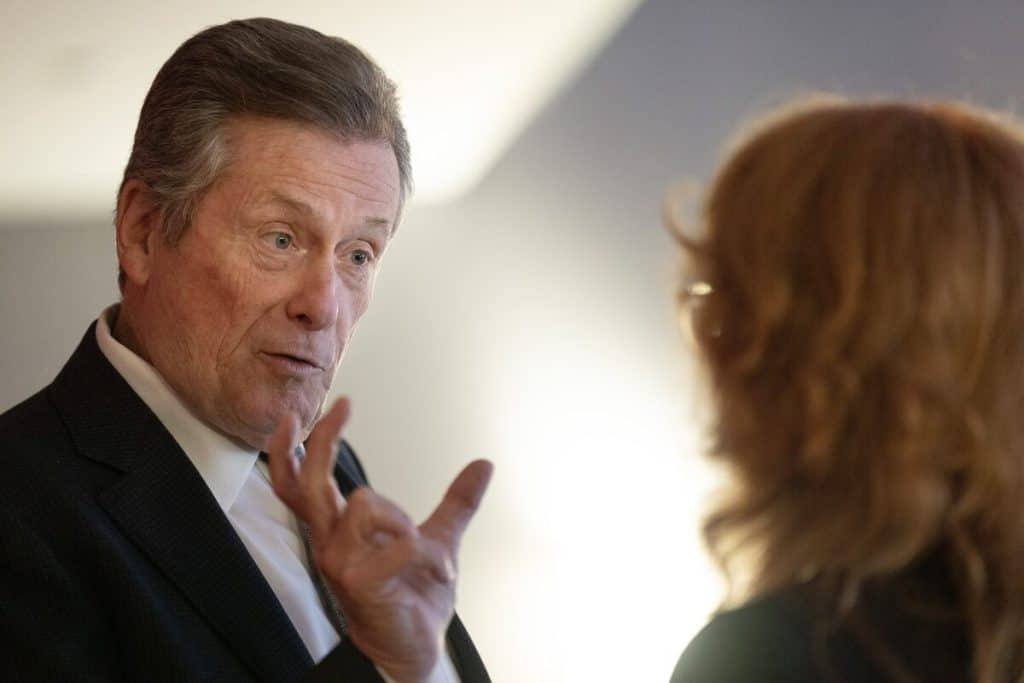
John Tory is a Canadian municipal politician who served as the 65th Mayor of Toronto from 2014 until his resignation in 2023. From a conservative perspective, his long tenure as mayor is often viewed through the lens of pragmatic governance, fiscal moderation, and a commitment to maintaining stability and order in Canada’s largest city. While rooted in conservative principles of fiscal responsibility and efficient administration, Tory’s approach was often characterized by a centrist, consensus-building style necessary for leading a diverse urban municipality, a style that sometimes elicited varied responses from different wings of the conservative movement.
Overview

Conservatives generally assessed John Tory’s mayoralty with a focus on his fiscal management and his efforts to provide stable governance for Toronto. A core expectation was that he would apply conservative principles of fiscal prudence to the city’s complex finances, resisting calls for significant tax increases and working to control spending. His consistent efforts to keep property tax increases at or near the rate of inflation resonated strongly with conservatives who prioritize affordability for residents and businesses.
Tory’s emphasis on infrastructure investment, particularly in transit, was also often viewed favorably by conservatives as a pragmatic necessity for economic growth in a rapidly expanding city. While conservatives typically advocate for limited government, they often recognize the essential role of public infrastructure in supporting a thriving private sector and ensuring social order through efficient movement of people and goods. His approach to building consensus on major transit projects, such as SmartTrack, often appealed to conservatives who value long-term planning and practical solutions over ideological rigidity.
His leadership style, often described as calm, steady, and unifying, aimed at bridging political divides within Toronto’s diverse council. This pragmatic approach, while effective in governance, sometimes led to mixed reactions from more ideologically purist conservatives. Some appreciated his ability to deliver results and maintain stability in a city prone to political contention, seeing it as an embodiment of conservative prudence. Others, however, might have desired a more aggressive pursuit of traditional conservative policies or a more confrontational stance against left-leaning opposition on council. Ultimately, Tory was seen by many conservatives as a consistent, if sometimes understated, voice for responsible city management and a stable urban environment.
Core Elements of Conservative Engagement with John Tory
Fiscal Prudence and Tax Management
A cornerstone of John Tory’s appeal to conservatives was his unwavering commitment to fiscal prudence and careful tax management in a city with substantial financial demands. Conservatives generally believe that prudent financial management is essential for long-term economic health and that excessive taxation can stifle economic activity and burden citizens. Throughout his tenure, Tory consistently aimed to keep property tax increases at or below the rate of inflation, fulfilling a key promise to voters. This approach resonated deeply with conservatives who prioritize affordability for residents and businesses, viewing it as a tangible demonstration of responsible governance. His efforts to identify efficiencies in city operations and to control spending aligned with the broader conservative tenet of limited government and skepticism towards unchecked public expenditure. For many conservatives, Tory’s fiscal stewardship provided a necessary counterpoint to what they might perceive as less disciplined spending habits in other levels of government or from other municipal politicians.
Infrastructure Investment and Pragmatic Growth
John Tory’s focus on significant infrastructure investment, particularly in transit, was a defining feature of his mayoralty and was largely supported by conservatives, albeit often with a pragmatic rather than purely ideological justification. While conservatives typically advocate for a limited government role in the economy, they recognize the essential function of public infrastructure in facilitating economic growth and ensuring the efficient operation of cities. Tory’s pursuit of transit expansion, such as the SmartTrack proposal and various subway and LRT projects, was framed as vital for Toronto’s economic competitiveness, alleviating congestion, and supporting the needs of a rapidly growing population. This aligns with the conservative emphasis on creating conditions for private sector flourishing. Rather than viewing these as exercises in large-scale social engineering, conservatives often saw these investments as practical necessities for maintaining social order and ensuring the continuity of the city’s economic dynamism, essential for a well-functioning urban center.
Social Order and City Management
Conservatives place a high value on social order and the effective management of urban environments, and John Tory’s leadership was often seen as embodying these priorities for Toronto. His approach to public safety, his efforts to ensure the city’s services functioned efficiently, and his general posture as a stable and unifying leader resonated with conservative sensibilities. In a large, complex, and diverse city like Toronto, maintaining a sense of order and ensuring that essential city services are reliably delivered are paramount concerns for many conservatives. Tory’s emphasis on tackling issues like transit overcrowding, managing homelessness with practical solutions, and supporting law enforcement reflected a commitment to creating a safe and well-regulated urban environment where citizens and businesses could thrive. This managerial focus, aiming for practical improvements in the daily lives of residents, often earned him support from conservatives who prioritize effective governance over ideological battles.
Centrist/Moderate Conservatism and Consensus-Building
John Tory’s political positioning often exemplified a more centrist or moderate form of conservatism, frequently characterized as “Red Toryism” in the Canadian context, or simply pragmatic conservatism. This approach prioritizes fiscal prudence and individual liberty but also acknowledges the role of public institutions and the need for social cohesion. His governance style was marked by a strong emphasis on consensus-building and working across political divides, which was particularly necessary on Toronto’s diverse city council. This pragmatic temperament appealed to conservatives who prioritize effective governance and stable administration, even if it meant compromising on some more ardent ideological goals. However, this centrist approach sometimes led to frustration among more ideologically pure conservatives who might have desired a more aggressive pursuit of tax cuts, privatization, or a more direct challenge to left-leaning policies. His style was a deliberate effort to unite diverse elements of Toronto, aligning with conservative concerns for social harmony and practical outcomes.
Conservative Perspectives on Specific Aspects of Tory’s Tenure/Platform
Financial Management and Tax Record
John Tory’s record on financial management and taxation was a central pillar of his appeal to conservatives. He consistently committed to keeping property tax increases at or below the rate of inflation, a promise he largely delivered on. This approach was widely viewed by conservatives as a responsible stewardship of taxpayer money, providing predictability for homeowners and businesses. His administration often highlighted efforts to find efficiencies within city services and to control the growth of the municipal budget, aligning with the conservative emphasis on fiscal responsibility. While Toronto faced significant financial challenges, conservatives generally credited Tory with managing the city’s finances with a degree of prudence, avoiding the kind of large tax hikes or burgeoning deficits that they would typically oppose.
Transit and Transportation Initiatives
A key focus of John Tory’s mayoralty was addressing Toronto’s significant transit and transportation challenges. His signature plan, SmartTrack, aimed to leverage existing GO Transit rail lines for rapid transit, promising more express service. He also oversaw progress on various subway extensions and light rail projects, often navigating complex funding agreements with provincial and federal governments. From a conservative standpoint, these initiatives were seen as necessary infrastructure investments to support the city’s economic growth and maintain its competitiveness, aligning with the pragmatic wing of conservatism that recognizes the importance of public goods for private sector flourishing. While skeptical of large government expenditures, conservatives often accept investments in essential infrastructure when they are seen as critical for market function and social order by reducing congestion and improving mobility.
Housing Affordability and Development
Toronto’s persistent housing affordability crisis presented a complex challenge for John Tory’s administration. From a conservative perspective, solutions to housing affordability often emphasize increasing housing supply through deregulation, reducing development charges, and streamlining approval processes to allow the private sector to build more homes. While Tory’s administration made efforts to accelerate development approvals and support housing initiatives, the city’s housing challenges remained acute. Conservatives might assess his approach by looking at the extent to which he successfully reduced bureaucratic hurdles, promoted private sector construction, and avoided policies that could exacerbate supply constraints. The conservative principle of limited government intervention would lead to a preference for market-based solutions to housing supply issues.
Relationship with Provincial Government and Intergovernmental Cooperation
John Tory’s relationships with successive provincial governments were crucial for Toronto, given its reliance on provincial funding and legislative authority. His ability to build working relationships with both Liberal (Kathleen Wynne) and Progressive Conservative (Doug Ford) premiers was often viewed positively by conservatives who value pragmatism and consensus-building in governance. His focus on identifying common ground to advance Toronto’s interests, particularly on transit and housing, demonstrated a practical approach to intergovernmental relations. This pragmatic cooperation, prioritizing results for the city, aligns with a conservative disposition to avoid unnecessary ideological clashes when practical solutions are available.
Conservative Thought on John Tory vs. Other Political Figures (Municipal Context)
John Tory’s political style and policy priorities set him apart from other significant figures in Toronto and Canadian politics, revealing distinct conservative appraisals.
Compared to more left-leaning municipal politicians in Toronto, such as progressive city councillors or rival mayoral candidates like Olivia Chow, Tory represented a clear conservative alternative. While his approach was often centrist, conservatives appreciated his resistance to significant tax increases, his skepticism towards expanding social programs without clear fiscal justifications, and his focus on efficient city administration rather than large-scale social engineering. He was seen as a bulwark against what many conservatives perceive as overly expansive or financially irresponsible progressive agendas at the municipal level. His emphasis on fiscal constraint and responsible growth offered a distinct choice for voters wary of higher taxes and increased public debt.In contrast to more populist or ardently right-wing figures, such as former Toronto Mayor Rob Ford, John Tory embodied a more traditional, establishment-oriented brand of conservatism. While sharing a commitment to fiscal restraint, Tory’s style was less confrontational, more intellectual, and geared towards building consensus rather than engaging in populist appeals. Conservatives who favored a more moderate and unifying leader appreciated Tory’s approach, seeing him as more electable and better suited to lead a diverse, global city. More populist conservatives, however, might have found his approach too cautious or insufficiently aggressive in challenging progressive orthodoxies or addressing perceived urban decay. This highlights the internal diversity within conservatism regarding leadership style and strategic priorities.
Conclusion
In conclusion, from a conservative perspective, John Tory’s tenure as Mayor of Toronto is largely characterized by a commitment to pragmatic conservative principles, particularly fiscal responsibility, prudent infrastructure investment, and the maintenance of social order in a complex urban environment. His leadership style, often marked by consensus-building and a centrist approach, was seen by many as effective in delivering stable governance and managing the city’s significant challenges. While his brand of conservatism might have varied from more ideologically stringent wings of the movement, his consistent focus on careful financial management, essential urban services, and fostering a functional city resonated with core conservative values, marking his significant place in Toronto’s political history.
You've read articles over the past year
Will you support conservative education?
A gift of any amount helps keep unique explanatory journalism free for all, and
supports our mission to help everyone understand the world, regardless of their
ability to pay.One-time contributors join our community of givers and will be kept
up to date on the journalism that you help keep free.

Milton Friedman
Milton Friedman (1912–2006) was the most consequential economist of the American right in the twentieth century. He rebuilt the case for free markets at a...

Margaret Thatcher
Margaret Thatcher was Prime Minister of the United Kingdom from 4 May 1979 to 28 November 1990, the longest continuous premiership of the twentieth century...

Karl Marx
Karl Marx (1818–1883) was the German philosopher and economist whose theory of class struggle became the most consequential political doctrine of the modern age. With...

Thomas Aquinas
Thomas Aquinas was a thirteenth-century Italian Dominican friar, theologian, and philosopher whose synthesis of Aristotelian philosophy and Christian doctrine became the most influential intellectual framework...