
Print
Cite
Feedback
Share
Introduction
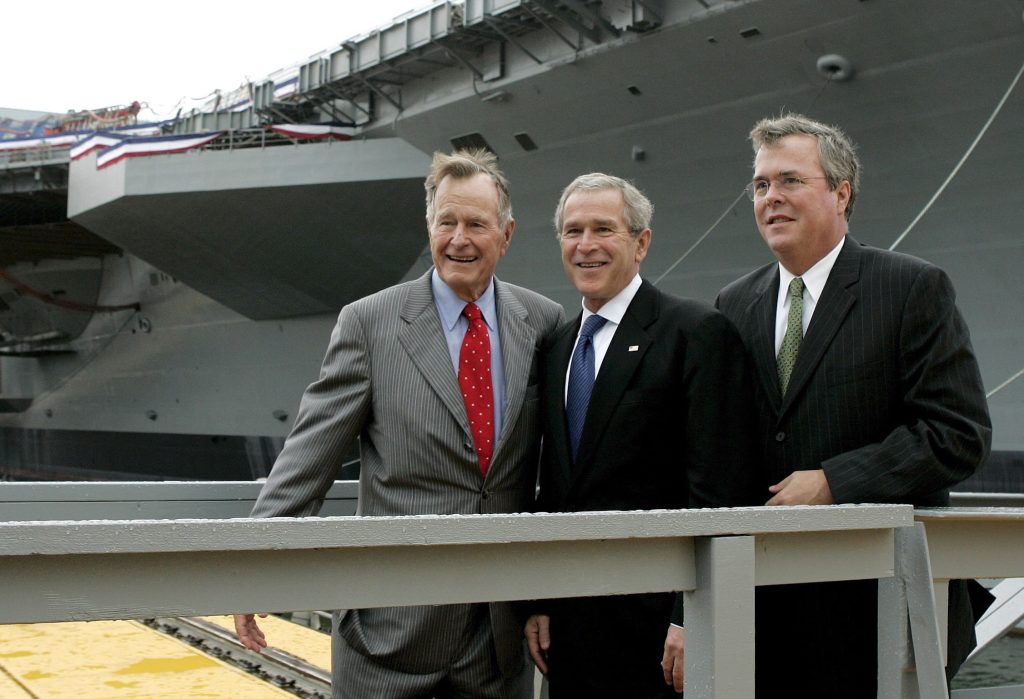
Jeb Ellis Bush (born February 11, 1953) is an American politician who served as the 43rd governor of Florida from 1999 to 2007. Born in Midland, Texas, he is the son of former President George H.W. Bush and the younger brother of President George W. Bush. Jeb Bush’s political journey encompasses his roles as the Governor of Florida, a candidate for the Republican presidential nomination in 2016, and a prominent advocate for conservative policies.
Jeb met his wife, Columba Garnica Gallo, in Mexico during a foreign exchange program and the two married in 1974. They have three children: George Prescott, Noelle Lucila, and Jeb Jr. Bush converted to Roman Catholicism in 1995 and has been an active member of the Knights of Columbus.
Political Career
Bush’s political career gained prominence during his tenure as the Governor of Florida, serving from 1999 to 2007. His leadership emphasized fiscal conservatism, advocating for tax cuts and reducing government spending. This earned him a reputation as a staunch advocate for limited government intervention.
Abortion and Social Issues
On the issue of abortion, Bush holds a conservative stance, supporting its legality only in cases of rape, incest, or when the life of the mother is in danger. He opposes public funding for abortion clinics. His views align with his broader socially conservative approach.
Healthcare and Immigration
Bush strongly opposes the Patient Protection and Affordable Care Act (ACA or “Obamacare”), advocating for its repeal and replacement with a “market-oriented” alternative. He supports a state- or local-government funded “catastrophic coverage” system. In the realm of immigration, Bush takes a nuanced stance, supporting a path to legal status for undocumented immigrants, but not citizenship. He emphasizes tougher enforcement of immigration laws, including penalties for businesses that hire illegal aliens.
Same-sex Marriage and Gun Rights
Bush’s conservative views extend to social issues like same-sex marriage, where he opposes it and believes that it should be determined at the state level rather than by the federal government. He supports businesses’ rights to refuse services for same-sex weddings based on religious grounds. In terms of gun rights, Bush favors expanding the rights of gun owners.
Criminal Justice and Drug Policy
Having adopted a “tough on crime” approach during his governorship, Bush supported policies such as mandatory minimum sentences for gun-related crimes. He also supports the death penalty. However, his perspective on drug policy has evolved, acknowledging his own past use of marijuana and expressing the belief that states should decide on the legalization of marijuana.
International Relations and Security
Bush has advocated for robust military spending and supports a continued presence of U.S. troops in Iraq. He backed his brother’s administration’s decision to invade Iraq in 2003 but later expressed reservations about the lack of post-invasion planning. Bush also favors the collection of metadata by the National Security Agency, supporting the USA Patriot Act.
- Tikkanen, Amy. "Jeb Bush." Last modified on February 7, 2024. Britannica. https://www.britannica.com/biography/Jeb-Bush.
- Wikipedia. "Jeb Bush." Last modified on February 29, 2024. Wikipedia. https://en.wikipedia.org/wiki/Jeb_Bush.
You've read articles over the past year
Will you support conservative education?
A gift of any amount helps keep unique explanatory journalism free for all, and
supports our mission to help everyone understand the world, regardless of their
ability to pay.One-time contributors join our community of givers and will be kept
up to date on the journalism that you help keep free.

Milton Friedman
Milton Friedman (1912–2006) was the most consequential economist of the American right in the twentieth century. He rebuilt the case for free markets at a...

Margaret Thatcher
Margaret Thatcher was Prime Minister of the United Kingdom from 4 May 1979 to 28 November 1990, the longest continuous premiership of the twentieth century...

Karl Marx
Karl Marx (1818–1883) was the German philosopher and economist whose theory of class struggle became the most consequential political doctrine of the modern age. With...

Thomas Aquinas
Thomas Aquinas was a thirteenth-century Italian Dominican friar, theologian, and philosopher whose synthesis of Aristotelian philosophy and Christian doctrine became the most influential intellectual framework...