
Print
Cite
Feedback
Share
John Diefenbaker, who served as the thirteenth Prime Minister of Canada from 1957 to 1963 and as leader of the Progressive Conservative Party from 1956 to 1967, holds a complex and often debated legacy within Canadian conservatism. From a conservative perspective, Diefenbaker is often celebrated for his ardent nationalism, his passionate advocacy for individual rights, and his populist appeal to the “common man.” However, his tenure is also remembered for significant political challenges, economic difficulties, and a sometimes contentious leadership style, prompting varied assessments from conservatives who weigh his principled stands against his political effectiveness.
Overview

Conservatives generally view John Diefenbaker as a figure who profoundly shaped the Progressive Conservative Party and Canadian political discourse, instilling a particular vision of Canada. His core appeal to conservatives often rests on his strong belief in national unity and his aspirational vision of “One Canada,” free from regional or linguistic divisions, with equal opportunities from coast to coast to coast. This resonates with the conservative emphasis on social order and cohesion within the nation. He championed Canadian sovereignty, often asserting Canada’s independence on the world stage, particularly in its relationship with the United States.
A hallmark of his legacy, widely celebrated by conservatives, is the enactment of the Canadian Bill of Rights in 1960. This pioneering piece of legislation, which pre-dated the Charter of Rights and Freedoms, reflected a deep conservative commitment to the rule of law and the protection of fundamental individual rights and freedoms against potential government overreach. This aligns with the conservative principle of upholding established legal frameworks to protect citizens.
Diefenbaker’s populist approach and his ability to connect with ordinary Canadians, particularly those in the Western provinces and rural areas, also earn him a place of respect among many conservatives. He often presented himself as a champion of the underdog and a voice for those overlooked by the established elites. However, his leadership was not without its trials. Economic challenges, including rising unemployment and a fluctuating Canadian dollar, tested his government, leading to debates among conservatives about fiscal management and economic policy. His often strained relations with the United States and within his own party also colored the perception of his effectiveness, creating a complex legacy that combines principled stands with political struggles.
Core Elements of Conservative Engagement with John Diefenbaker
National Unity and Sovereignty
John Diefenbaker’s vision of “One Canada” stands as a towering aspect of his appeal to Canadian conservatives. This fervent commitment to national unity aimed to bridge the traditional divides of geography, language, and culture, promoting a cohesive national identity where every Canadian, regardless of their background or region, felt equally part of the country. This deeply aligns with the conservative emphasis on social order and the importance of a shared national identity for the stability and continuity of the state. Beyond internal unity, Diefenbaker was a staunch advocate for Canadian sovereignty, frequently asserting Canada’s independence in foreign policy, notably in its relationship with the United States. His desire for Canada to pursue its own path on the global stage, free from undue influence, resonates with conservative principles of national self-determination and prudent international engagement.
Individual Rights and the Rule of Law
The most enduring legislative achievement of Diefenbaker’s tenure, and one consistently praised by conservatives, is the passage of the Canadian Bill of Rights in 1960. This legislation, enacted before the more comprehensive Charter of Rights and Freedoms, marked a significant step in enshrining fundamental freedoms and legal rights for Canadians. For conservatives, this act demonstrated a profound commitment to the rule of law and the protection of individual liberty—core tenets of conservatism. It reflected a belief that a strong legal framework is essential to safeguard citizens from potential governmental overreach and to ensure justice. While subsequent legal developments have refined the application of rights, Diefenbaker’s Bill is often cited as a testament to his dedication to the legal protection of the individual, a principle conservatives consistently champion.
Populism and the Champion of the Common Man
John Diefenbaker possessed a unique populist appeal that forged a strong connection with ordinary Canadians, particularly those outside the traditional power centres of Central Canada, such as the Western provinces and rural communities. He cultivated an image as a champion of the “common man,” often railing against perceived elites and powerful interests. This resonates with a strain of conservatism that values the perspectives of everyday citizens over those of entrenched establishments and bureaucratic experts. His folksy demeanor and impassioned rhetoric allowed him to speak directly to the concerns of working Canadians, farmers, and small business owners. This ability to articulate the grievances and aspirations of the grassroots helped to solidify his support base and is seen by many conservatives as a model for authentic political leadership that prioritizes the interests of all citizens.
Fiscal Prudence and Economic Development
Diefenbaker’s approach to the economy reflects a mixed but generally conservative outlook on fiscal prudence and economic development. While his government faced economic challenges, including rising unemployment and fluctuations in the Canadian dollar, his rhetoric often emphasized responsible spending and a belief in the potential for national economic growth. His administration pursued ambitious national development projects, particularly in the North and in natural resource sectors, aligning with a conservative desire to leverage national assets for economic prosperity. Conservatives would evaluate his economic policies through the lens of their impact on national productivity, the role of government in stimulating growth versus market forces, and the management of public finances. The ongoing debate within conservative ranks about the balance between interventionist development and pure free-market principles often finds historical illustration in Diefenbaker’s economic record
Traditional Values and Social Conservatism
John Diefenbaker’s personal background and public persona often reflected a commitment to traditional values and a cautious approach to social change that resonates with many social conservatives. While not as overtly focused on social issues as some later conservative leaders, his emphasis on morality, civic duty, and a traditional understanding of Canadian identity appealed to segments of the electorate concerned about the erosion of established norms. His rhetoric often invoked the importance of character and integrity in public life. This subtle but persistent alignment with traditional social conservative principles contributed to his enduring appeal among those who seek leaders who embody and articulate a respect for Canada’s historical and moral foundations.
Conservative Perspectives on Key Aspects of Diefenbaker’s Tenure/Platform
The Canadian Bill of Rights: A Landmark for Individual Liberties
For conservatives, the Canadian Bill of Rights, enacted by John Diefenbaker’s government, remains a landmark achievement that underscores his dedication to individual rights and the rule of law. Although it was a statutory rather than a constitutional document, making it subordinate to federal legislation and provincial powers, its passage was a powerful symbolic statement and a significant step towards codifying fundamental freedoms. Conservatives often praise Diefenbaker for recognizing the importance of enshrining these rights in law, asserting them against the power of the state. They view it as an embodiment of the principle that government derives its legitimacy from its respect for the inherent rights of individuals, aligning with a limited government philosophy. While its practical application was later superseded by the Charter of Rights and Freedoms, the Bill of Rights is celebrated as a testament to Diefenbaker’s pioneering commitment to civil liberties from a conservative standpoint.
Economic Challenges and Responses
Diefenbaker’s government faced significant economic headwinds, including a slowdown in the late 1950s and early 1960s, characterized by rising unemployment and a fluctuating exchange rate for the Canadian dollar. Conservatives would assess his economic response through the lens of fiscal prudence and effective economic management. His administration pursued some expansionary policies, including increased social spending in certain areas, which some fiscal conservatives might have viewed with concern. However, he also championed resource development and sought to diversify Canada’s trade relationships beyond the United States, initiatives that align with conservative goals for national economic strength and independence. The complexity of the economic context of his era often leads to a nuanced conservative evaluation of whether his policies sufficiently adhered to principles of limited government intervention and market-driven growth.
US-Canada Relations and Canadian Independence
John Diefenbaker’s relationship with the United States, particularly with President John F. Kennedy, was famously strained, marked by his staunch defense of Canadian sovereignty and his reluctance to align automatically with American foreign policy. Key flashpoints included his government’s decision to cancel the Avro Arrow interceptor aircraft program and his delayed response during the Cuban Missile Crisis. From a conservative perspective, Diefenbaker’s assertion of Canadian independence, even when it caused friction with a powerful ally, is often viewed positively as a testament to his nationalism and commitment to Canada’s distinct identity on the world stage. While some might argue for the pragmatic necessity of strong alliance, many conservatives appreciate his resistance to what he perceived as American overreach, upholding the principle that Canada should determine its own destiny without undue external pressure.
National Development Projects and the Vision for the North
Diefenbaker’s leadership saw a renewed emphasis on national development projects, notably his “Roads to Resources” program aimed at opening up Canada’s North and facilitating resource extraction. This vision for developing Canada’s vast natural resources and expanding its infrastructure aligns with a conservative belief in leveraging national assets for economic growth and strengthening the country’s economic base. These projects were seen as embodying his “One Canada” vision by extending economic opportunity and connectivity to remote regions. For conservatives, such initiatives represent a proactive role for government in facilitating wealth creation and strengthening the nation’s physical and economic foundations, albeit within a framework that ideally encourages private sector participation and long-term benefit.
Indigenous Rights and Recognition
John Diefenbaker’s government made significant strides in advancing Indigenous rights, a legacy often highlighted by conservatives as an example of his commitment to individual rights and fairness for all Canadians. In 1960, his government extended the right to vote in federal elections to all Indigenous peoples without requiring them to give up their Indian status or reserve residency. This was a crucial step towards greater political inclusion and self-determination for Indigenous communities. Conservatives would view this as consistent with the broader principle of extending fundamental rights and the rule of law to all citizens, correcting historical injustices by ensuring full participation in the democratic process. This aspect of his legacy reflects a humanitarian impulse within conservatism that seeks to ensure justice and dignity for all individuals, particularly those who have historically been marginalized.
Conservative Thought on Diefenbaker’s Legacy
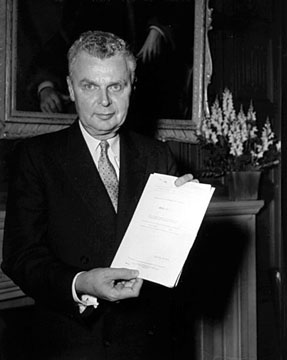
John Diefenbaker’s legacy is viewed with a blend of admiration and critical reflection within Canadian conservative thought. He is largely celebrated for his unwavering nationalism and his vision of a strong, unified, and independent Canada, free from both internal divisions and external influence. His populist appeal and his role as a champion for individual rights, especially through the Bill of Rights, cement his place as a principled figure who sought to empower ordinary citizens. Conservatives often see in Diefenbaker a powerful orator and a leader committed to fundamental values.However, the assessment is nuanced by his political challenges, particularly his sometimes turbulent relationship with his own party and his inability to secure a long-term majority government despite his personal popularity. More pragmatic conservatives might contrast his often confrontational style with the more technocratic or consensus-driven approaches of later leaders, reflecting different interpretations of how best to achieve conservative goals within a diverse political landscape. Despite the controversies of his tenure, Diefenbaker’s impact on Canadian conservatism is undeniable. He remains an iconic figure, embodying a particular blend of social conservatism, Western populism, and ardent Canadian nationalism that continues to influence the party’s identity and aspirations. His legacy serves as a reminder of the enduring conservative commitment to national sovereignty, individual liberty, and a belief in the inherent strength and potential of all Canadians.
- Philosophical Conservatism: A Research Plan
- John Diefenbaker - Wikipedia, accessed June 26, 2025, https://en.wikipedia.org/wiki/John_Diefenbaker
- Conservative Party of Canada - Wikipedia, accessed June 26, 2025, https://en.wikipedia.org/wiki/Conservative_Party_of_Canada
- Canadian Bill of Rights - Wikipedia, accessed June 26, 2025, https://en.wikipedia.org/wiki/Canadian_Bill_of_Rights
- One Canada - Wikipedia, accessed June 26, 2025, https://en.wikipedia.org/wiki/One_Canada
- Social conservatism - Wikipedia, accessed June 26, 2025, https://en.wikipedia.org/wiki/Social_conservatism
- Fiscal conservatism - Wikipedia, accessed June 26, 2025, https://en.wikipedia.org/wiki/Fiscal_conservatism
- Avro Arrow - Wikipedia, accessed June 26, 2025, https://en.wikipedia.org/wiki/Avro_Canada_CF-105_Arrow
- Cuban Missile Crisis - Wikipedia, accessed June 26, 2025, https://en.wikipedia.org/wiki/Cuban_Missile_Crisis
You've read articles over the past year
Will you support conservative education?
A gift of any amount helps keep unique explanatory journalism free for all, and
supports our mission to help everyone understand the world, regardless of their
ability to pay.One-time contributors join our community of givers and will be kept
up to date on the journalism that you help keep free.
Woman’s Rights
Woman's rights denotes the body of legal and political claims asserting equal standing for women in property, contract, suffrage, education, employment, and family law. In...

White Privilege
White privilege is the claim that people classified as white receive unearned advantages in societies with a history of racial hierarchy, and that these advantages...

Torture
Torture is the deliberate infliction of severe pain on a person held in custody, for confession, information, punishment, or intimidation. European law abolished it as...

Social Security
Social Security is the United States' federal old-age, survivors, and disability insurance program, financed by a dedicated payroll tax and administered by the Social Security...