
Print
Cite
Feedback
Share
Key Takeaways
- Naturalization is the process through which individuals acquire citizenship in a country different from their country of birth.
- Conservatives support naturalization through legal means as immigration is an important system for building a country.
- Conservatives support merit-based immigration systems over unchecked naturalization and encourage patriotic adoptions.
Introduction
Naturalization, the process by which an individual acquires citizenship in a country different from their country of birth, is a critical facet of immigration and nationality laws worldwide. This transformative journey allows individuals to become full-fledged members of their adopted nation, with the same rights and responsibilities as those born within its borders.[1]
Naturalization typically involves a series of legal steps, which vary from one country to another but generally include residency requirements, language and civic knowledge tests, background checks, and a formal oath of allegiance. The process is not merely a bureaucratic procedure; it signifies a profound commitment to the values, culture, and ideals of the host nation.
Conservative perspective
Conservatives support controlled naturalization for three main reasons. First, Conservatives assert the importance of upholding immigration laws and procedures. Second, naturalization promotes integration of newcomers, but should be a controlled process to preserve traditional values. Third, conservatives support merit-based immigration system, which leads to positive contribution to the host country.
Upholding laws and regulations
Conservatives stress the significance of respecting and upholding a nation’s immigration laws, arguing that naturalization should follow a structured legal process to maintain order and ensure that everyone abides by the same set of rules. Conservatives contend that those who wish to become citizens should do so through legal channels and respect the nation’s laws, adding that failing to do so may lead to chaos and undermine the principle of law and order.[2]
Concerns are expressed by conservatives about the potential security risks associated with lax immigration policies. Conservatives argue that even before thinking of a naturalization process, it is essential for thorough background checks to identify potential threats, emphasizing that a careful vetting process helps protect a nation from individuals with malicious intentions. Borders are a thing for a reason – a country should have control over who and how many people enter.
Integration and preserving values
Conservatives argue that rapid and unchecked naturalization can strain a nation’s ability to integrate newcomers effectively. The belief is that an emphasis on assimilation is necessary to preserve national values and cultural cohesion. Conservatives may advocate for measures like language proficiency requirements and civic education to promote integration.
Conservatives are concerned about the preservation of a given nation’s culture, values, and way of life, arguing that rapid and unrestricted immigration could dilute or erode domestic cultural norms and practices. Conservatives contend that naturalization should be approached with caution and a controlled naturalization process is essential in maintaining a cohesive national identity by ensuring that new citizens share in the nation’s core values and traditions.
Positive contribution to the economy and society
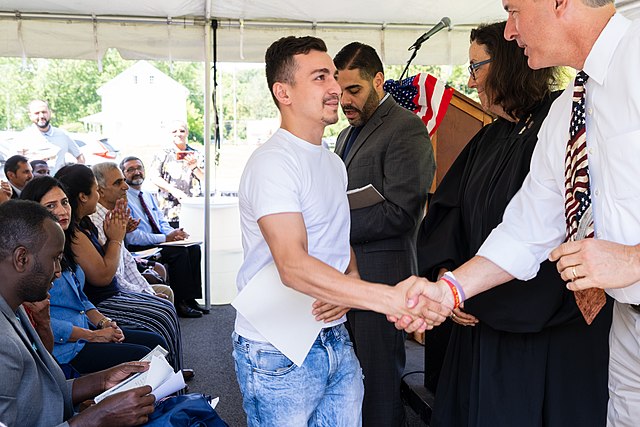
Conservatives often emphasize the economic implications of immigration. Arguments are made that an influx of new citizens should not unduly strain a nation’s welfare system. That’s why many conservatives support a merit-based immigration system, where individuals are granted citizenship based on their skills, education, and ability to contribute to the country’s economy and society. Conservatives argue that that this approach benefits both the newcomers and the host nation, where new citizens can assimilate more easily and contribute to the country’s overall prosperity.[3]
- [1] Lægaard, Sune. 2010. “Immigration, Social Cohesion, and Naturalization.” Ethnicities 10 (4): 452–69. doi:https://doi.org/10.1177/1468796810378324.
- [2] Zoller. 2013. “Citizenship after the Conservative Movement.” Indiana Journal of Global Legal Studies 20 (1): 279. doi:https://doi.org/10.2979/indjglolegstu.20.1.279.
- [3] Bier, David. 2023. “Conservatives and a Libertarian on Immigration at CPAC.” Cato.org. https://www.cato.org/blog/conservatives-libertarian-immigration-cpac.
You've read articles over the past year
Will you support conservative education?
A gift of any amount helps keep unique explanatory journalism free for all, and
supports our mission to help everyone understand the world, regardless of their
ability to pay.One-time contributors join our community of givers and will be kept
up to date on the journalism that you help keep free.

Woman’s Rights
Woman's rights denotes the body of legal and political claims asserting equal standing for women in property, contract, suffrage, education, employment, and family law. In...

White Privilege
White privilege is the claim that people classified as white receive unearned advantages in societies with a history of racial hierarchy, and that these advantages...

Torture
Torture is the deliberate infliction of severe pain on a person held in custody, for confession, information, punishment, or intimidation. European law abolished it as...

Social Security
Social Security is the United States' federal old-age, survivors, and disability insurance program, financed by a dedicated payroll tax and administered by the Social Security...